
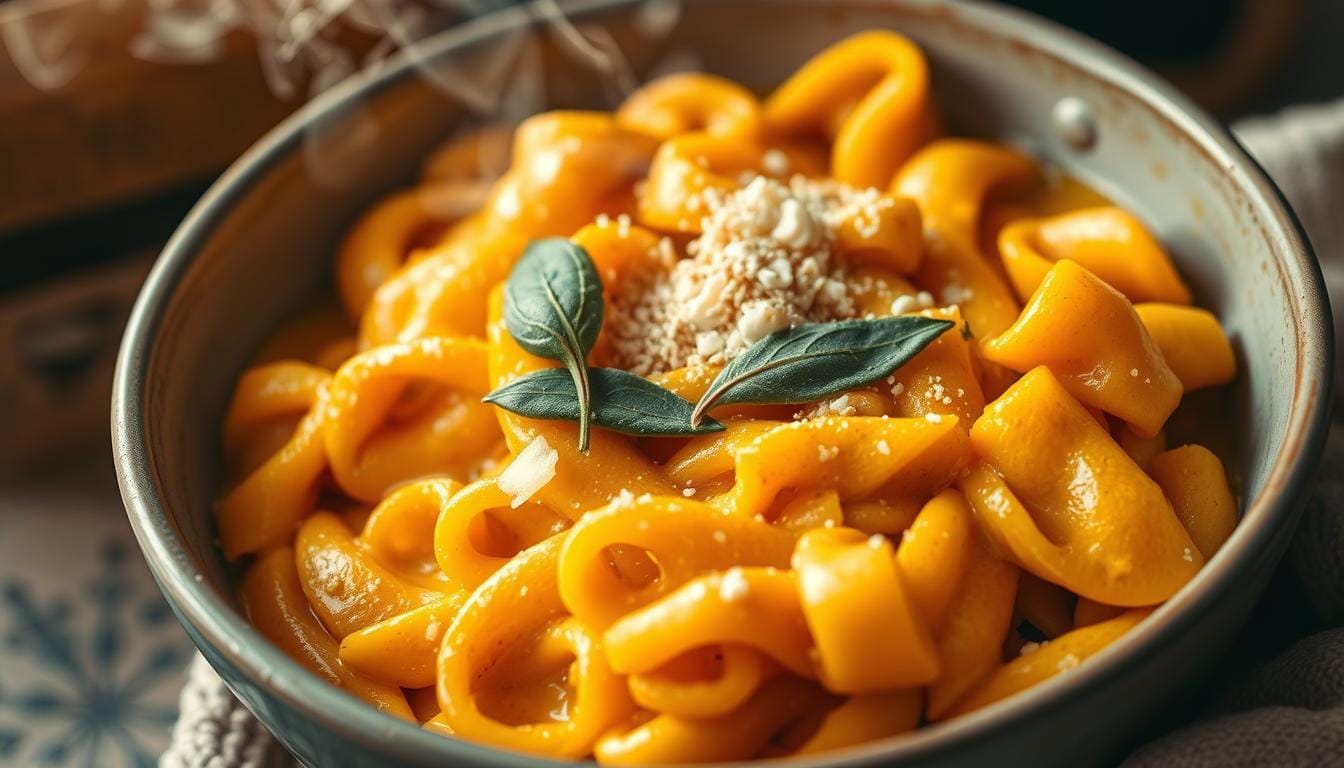
As the leaves change colors and the air cools down, you’re likely craving a dish that’s both comforting and flavorful. Imagine a creamy, dreamy pasta dish that captures the essence of fall. A recipe that combines the sweetness of roasted vegetables with the richness of coconut milk, creating a truly satisfying meal.
This delicious fall recipe is perfect for a cozy night in. The combination of caramelized garlic and roasted butternut squash creates a depth of flavor that will leave you wanting more. It’s a creamy pasta recipe that’s not only delicious but also free from non-vegetarian ingredients, making it a great option for everyone.
Table of Contents
Introduction to Butternut Squash Pasta
As autumn leaves change colors, we start craving warm meals like butternut squash pasta. This dish is not just tasty but also good for you, perfect for fall.
Autumn flavors bring warmth and comfort. Butternut squash pasta is a prime example, with roasted squash and caramelized garlic. It’s a nourishing and comforting meal that showcases autumn’s richness.
The Appeal of Autumn Flavors
Autumn flavors are warm and deep, often featuring roasted veggies, herbs, and spices. Butternut squash pasta is a classic fall dish, blending these flavors. It’s a healthy pasta dish with the squash’s sweetness and garlic’s savory taste.
This pasta is also very versatile. You can add your favorite herbs and spices or try different pasta types. It’s a great vegetarian pasta recipe for any time.
Nutritional Benefits of Butternut Squash
Butternut squash is not just tasty; it’s also full of nutrients. It’s rich in vitamins A and C, potassium, and fiber. Adding it to pasta makes a simple recipe into a healthy pasta dish.
| Nutrient | Amount per 100g | Benefits |
|---|---|---|
| Vitamin A | 100% DV | Supports eye health and immune function |
| Vitamin C | 25% DV | Boosts immunity and fights oxidative stress |
| Potassium | 12% DV | Helps regulate blood pressure |
| Fiber | 3g | Aids in digestion and satiety |
Adding butternut squash to pasta recipes boosts flavor and nutrition. This makes butternut squash recipes like our pasta dish a healthy and tasty choice.
Choosing the Right Pasta for Your Dish
There are many pasta options to choose from. The right one is key for a great butternut squash pasta dish. The pasta you pick can change the dish’s texture and taste.
Different Pasta Types
Many pasta shapes go well with butternut squash sauce. Penne and fusilli are great because they hold the sauce well. For a lighter taste, try spaghetti or linguine.
| Pasta Type | Description | Suitability for Butternut Squash Pasta |
|---|---|---|
| Penne | Tube-shaped pasta | Excellent for holding creamy sauces |
| Fusilli | Spiral-shaped pasta | Great for trapping sauce within its spirals |
| Spaghetti | Long, thin, cylindrical pasta | Ideal for a lighter, more traditional pasta dish |
Gluten-Free Options
If you need gluten-free pasta, there are good options. Gluten-free penne and gluten-free fusilli made from rice or corn work well. They taste and feel similar to regular pasta.
When picking gluten-free pasta, always check the ingredients and cooking tips. Different brands might need different cooking times or methods.
Selecting the Perfect Butternut Squash
Finding the right butternut squash is key to a great creamy pasta dish. A quality squash can greatly enhance the taste and texture of your meal.
Tips for Picking Quality Squash
Look for a squash that feels heavy for its size and has a hard, smooth skin. Stay away from squash with soft spots or sprouts. The stem should be dry and firm, showing it’s fresh.
Key Characteristics to Look For:
- Heavy for its size
- Hard, smooth rind
- No soft spots or sprouting
- Dry, firm stem
| Characteristic | Ideal | Not Ideal |
|---|---|---|
| Weight | Heavy | Light |
| Rind | Hard, Smooth | Soft, Blemished |
| Stem | Dry, Firm | Moldy, Soft |
Prepping Your Squash for Cooking
After picking your squash, it’s time to get it ready for cooking. Peel it with a vegetable peeler, then cut it in half lengthwise. Remove the seeds and pulp, and chop it into chunks.
For butternut squash recipes, cooking the squash until it’s tender is important. You can roast or boil it. Roasting adds a deeper flavor, while boiling is faster.
Once cooked, puree the squash. Mix it with garlic, cream, and parmesan cheese for a rich, creamy sauce. This sauce is perfect for your homemade pasta sauce.
Cooking Techniques for Butternut Squash
To get the most out of your butternut squash, it’s key to know the different cooking methods. The right way can make the squash sweeter and match the pasta’s flavors.
Roasting vs. Boiling
Roasting and boiling are top choices for cooking butternut squash. Roasting brings out the squash’s deep, nutty taste. Boiling keeps its color and texture bright.
Roasting is best because it caramelizes the squash’s sugars, adding richness to your dish. Boiling is quicker, perfect when you’re in a rush.
| Cooking Method | Time | Flavor Outcome |
|---|---|---|
| Roasting | 45-60 minutes | Deep, caramelized flavor |
| Boiling | 15-20 minutes | Retains natural sweetness |
Quick Cooking Methods
For quicker options, try microwaving or steaming the squash. These methods save time and keep nutrients.
“Steaming is a great way to cook butternut squash quickly without losing its nutritional value,” says a culinary expert.
These fast methods are perfect for quick, healthy pasta dishes. They ensure your meal is both tasty and nutritious.
Choosing the right cooking method for your butternut squash can lead to many healthy pasta dishes. These dishes are both fulfilling and good for you.
Crafting the Creamy Sauce
To make your butternut squash pasta special, you need a creamy sauce. This sauce is rich and flavorful. It coats the pasta and complements the roasted butternut squash. We’ll look at the ingredients and steps to make the perfect sauce.
Ingredients for the Sauce
The creamy sauce for your pasta is made with a few ingredients. You’ll need:
- Roasted butternut squash (the base, adding sweetness and creaminess)
- Garlic (for extra flavor)
- Coconut milk (for a creamy texture without dairy)
- Parmesan cheese (for a salty, nutty taste)
These ingredients make a homemade pasta sauce that’s tasty and vegetarian-friendly.
Step-by-Step Sauce Preparation
Making the creamy sauce is easy. Just blend the roasted squash with other key ingredients. Here’s how:
- Start by scooping the roasted squash into a blender or food processor.
- Add minced garlic for more flavor.
- Pour in coconut milk for creaminess.
- Add Parmesan cheese and blend until smooth.
- Season with salt and pepper to taste, adjusting as needed.
This creamy pasta recipe makes a smooth, velvety sauce. By following these steps, you can make a memorable homemade pasta sauce. It will take your butternut squash pasta to new heights.
Enhancing Flavor with Seasonings
The right mix of herbs and spices can make your butternut squash pasta a true delight. Seasonings are key to boosting the taste of your vegetarian pasta recipe.
Essential Herbs and Spices
Herbs like rosemary and thyme bring out the butternut squash’s natural sweetness. Spices like black pepper and nutmeg add depth without taking over the dish.
- Rosemary: Adds a piney flavor that pairs well with squash.
- Thyme: Provides a subtle earthiness that enhances the overall flavor.
- Black Pepper: Adds a sharpness that balances the sweetness of the squash.
- Nutmeg: Contributes a warm, slightly sweet flavor.
Recommended Add-ins for Depth
Adding roasted vegetables can also deepen your butternut squash pasta recipe. Try roasting Brussels sprouts or carrots before mixing them with your pasta.
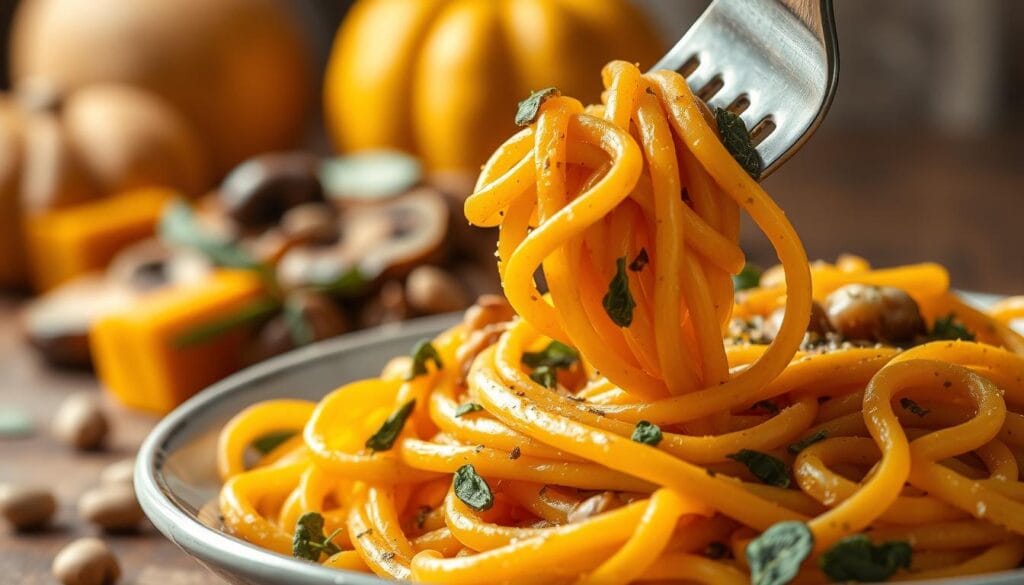
- Roasted garlic for an intense flavor.
- Sautéed spinach for a burst of nutrients.
- Toasted pine nuts for added crunch.
By carefully choosing and mixing these ingredients, you can craft a hearty and fulfilling vegetarian pasta dish. It will highlight the rich flavors of autumn.
Assembling the Pasta Dish
Mixing your cooked pasta with creamy butternut squash sauce is easy and looks great. First, make sure your pasta is just right and your sauce is warm but not boiling.
Combining Pasta and Sauce
Just put your cooked pasta into the saucepan with the squash sauce. Gently toss it to cover every strand with the rich and creamy sauce. If it’s too thick, add a little pasta water.
Adding Toppings for Extra Texture
For more texture and taste, top your pasta with freshly grated Parmesan cheese and some chopped herbs like parsley or sage. You can also sprinkle toasted nuts or pumpkin seeds for crunch.
Other great toppings include crispy bacon, caramelized onions, or roasted veggies. Be creative and make your pasta dish your own. It’s a easy pasta recipe to enjoy.
Serving Suggestions and Pairings
To make your meal better, try pairing your butternut squash pasta with dishes that match its taste and texture.
Complementary Side Dishes
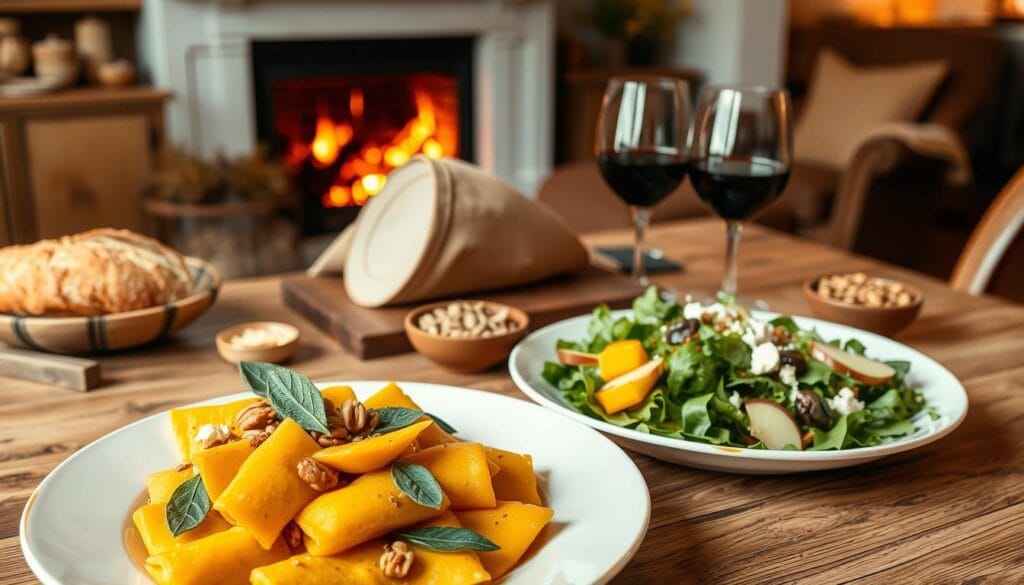
Butternut squash pasta is great as a main dish or a side. Pair it with roasted veggies like Brussels sprouts or broccoli for a full meal. A simple green salad with a light dressing also goes well with the pasta’s rich taste.
For a heartier meal, serve the pasta with garlic bread or a crusty loaf. The warm, creamy pasta and crunchy bread make a great mix.
Perfect Pairings
Adding protein to your meal? Try pairing your pasta with sausage, like in this sausage butternut squash penne pasta recipe. The sausage’s savory taste goes well with the squash’s sweetness, making a tasty dish.
For a veggie option, add roasted chicken or toasted nuts for texture and flavor. These fall recipes will be favorites in your kitchen.
By choosing the right pairings for your vegetarian pasta recipe, you can make a meal that’s memorable and highlights the season’s flavors.
Storing Leftovers and Reheating Tips
You can enjoy your Creamy Butternut Squash Pasta for longer with simple storage and reheating tips. Whether you’re cooking for one or saving some for later, it’s key to keep your pasta dish fresh.
Best Practices for Storage
To keep your pasta creamy and flavorful, store leftovers in an airtight container. Add a splash of water or broth before sealing to prevent the sauce from drying out. Press plastic wrap or parchment paper onto the pasta’s surface to avoid a skin forming.
For optimal storage, consider the following table:
| Storage Method | Container Type | Duration |
|---|---|---|
| Refrigerate | Airtight Container | Up to 3 Days |
| Freeze | Freezer-Safe Container or Bag | Up to 2 Months |
How to Reheat Without Losing Flavor
Reheat your Creamy Butternut Squash Pasta on the stovetop or in the microwave. For stovetop reheating, add a little water or broth and heat over low, stirring often. For microwave reheating, cover the dish and heat in short intervals, stirring between each heating, until the pasta is warmed through.
For more easy pasta recipes and variations, check out Julia’s Album. They have a twist on butternut squash pasta with sausage and spinach.
By following these storage and reheating tips, you can enjoy your Creamy Butternut Squash Pasta as a healthy pasta dish for days. It makes meal prep and leftovers easy.
Conclusion: Enjoying Your Butternut Squash Pasta
As fall arrives, you’re ready to make a delicious butternut squash pasta. This dish captures the cozy feel of autumn. It combines tasty flavors with the health benefits of butternut squash.
Making the Most of Your Recipe
This pasta recipe is more than food; it’s a way to share love. It’s perfect for dinner parties or cozy nights at home. It will quickly become a favorite in your fall cooking.
Enjoying the creamy sauce and soft pasta is special. It’s about sharing moments with those you care about. So, invite your loved ones to enjoy this comforting pasta. It’s a great way to celebrate the season and create memories together.