
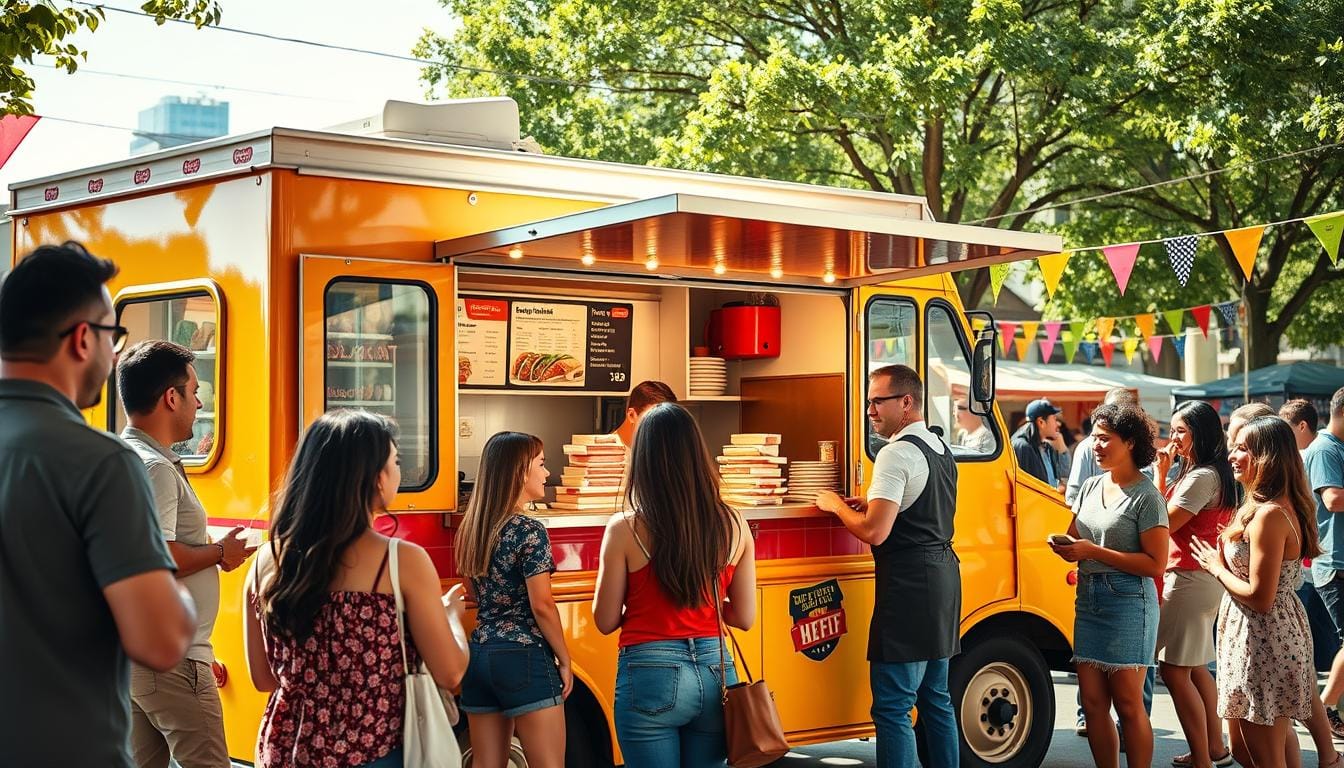
“The way to get started is to quit talking and begin doing.” These words by Walt Disney capture the essence needed to start a food truck business ideas venture. The global demand for mobile dining is growing. This is because people love convenience and unique experiences. So, starting a profitable food truck business is now easier than before.
To make the most of this trend, pick a concept that’s easy on your wallet but can bring in big profits. Look for inexpensive yet appealing concepts that many people will enjoy. This way, you can build a successful business in the mobile food industry.
Table of Contents
Understanding the Food Truck Business Model
Knowing the food truck business model well is key to making profits. You must understand the basics like profit margins, start-up costs, and rules you need to follow.
Overview of Profit Margins
Profit margins in the food truck world can change a lot. This depends on things like how much you charge for food, what you pay for ingredients, and how well you run your truck. The best food trucks make 30-35% margins by meeting customer needs and running smoothly.
To keep profits up, watch your costs and adjust your prices as needed. Look for cheap suppliers, cut down on waste, and pick menu items that sell well.
Key Start-Up Costs
Starting a food truck business comes with big costs. You’ll need to buy or rent a truck, get kitchen gear, stock up on food, and get the right permits and licenses.
| Start-Up Cost | Estimated Cost |
|---|---|
| Food Truck Purchase/Rental | $50,000 – $100,000 |
| Kitchen Equipment | $10,000 – $30,000 |
| Initial Inventory | $3,000 – $6,000 |
| Licenses and Permits | $1,000 – $5,000 |
Essential Licensing and Permits
Getting the right licenses and permits is crucial for starting a food truck business. You’ll need health permits, business licenses, and maybe special event permits.
Make sure to check what’s needed in your area. Following all rules helps you avoid fines and keeps your business running smoothly.
Choosing the Right Niche for Your Food Truck
Finding the right niche for your food truck is key to attracting loyal customers. It helps you stand out in a crowded market. By focusing on a specific area, you can create a menu and marketing plan that speaks to your audience.
Popular Food Trends
Knowing the latest food trends is vital for your food truck’s success. Trends like plant-based and vegan options are very popular. This offers a great chance for food truck owners to grow their business by adapting.
- Vegan and vegetarian cuisine
- Gourmet grilled cheese
- Specialty tacos
Specialty Diets and Health Foods
Targeting specialty diets and health-conscious people can be very profitable. With more people wanting healthy and sustainable food, offering gluten-free, keto, and paleo options can build a loyal customer base.
Local vs. Global Cuisine
Choosing between local and global cuisine is a big decision. Local food can connect with the community, while global cuisine offers a unique taste experience for the adventurous.
| Niche | Target Audience | Menu Concepts |
|---|---|---|
| Vegan/Vegetarian | Health-conscious individuals | Plant-based burgers, vegan wraps |
| Gourmet Grilled Cheese | Comfort food enthusiasts | Artisanal cheeses, unique fillings |
| Specialty Tacos | Adventurous eaters | Unique proteins, creative toppings |
By picking a niche that fits your brand and appeals to your target market, you can run a successful food truck business. Even with a small budget, you can thrive.
Mobile Coffee and Beverage Bar
Starting a mobile coffee and beverage bar can be a smart move for entrepreneurs. Coffee is very profitable, with a small cost to make but a high price to sell. This makes it a great choice for a business.
To succeed, you need the right equipment, top-notch ingredients, and a strong brand. These are the keys to a successful mobile coffee and beverage bar.
Equipment Needs
Choosing the right equipment is crucial. You’ll need:
- A high-quality coffee machine
- Grinders and brewers
- Refrigeration units for storing milk and other ingredients
- Point-of-sale systems for efficient transactions
Using energy-efficient equipment can save you money. Look for gear that’s made for mobile use and can handle travel well.
Ingredient Sourcing
Getting high-quality ingredients is key to keeping customers coming back. This means:
- Selecting premium coffee beans
- Using fresh milk and dairy alternatives
- Incorporating natural flavorings and syrups
Working with local suppliers can get you fresh ingredients at good prices. This helps your profits grow.
| Ingredient | Source | Cost Benefit |
|---|---|---|
| Coffee Beans | Local Roasters | Freshness and flavor, competitive pricing |
| Milk and Dairy | Local Dairy Farms | High quality, supports local economy |
| Natural Syrups | Specialty Food Suppliers | Unique flavors, enhances customer experience |
Branding Your Beverage Truck
Branding is essential to stand out. You need a unique brand, an eye-catching truck wrap, and social media presence.
A strong brand narrative and consistent look can draw in and keep customers. Think about your brand’s story and how it connects with your audience.
In summary, a mobile coffee and beverage bar can be a great business with the right focus on equipment, ingredients, and branding. Quality, efficiency, and customer interaction are key to success.
Vegetarian and Vegan Options
The demand for plant-based foods is growing fast. This is a great chance for food truck owners. By adding vegetarian and vegan options, you can attract health-conscious customers.
Benefits of Plant-Based Foods
Plant-based foods are good for food truck businesses. They can help lower costs and let you charge more. This can make your profits go up. Plus, vegan and vegetarian food appeals to many people, including those who eat meat sometimes.
Many food trucks have found success with vegan dishes. For example, a vegan truck might serve jackfruit tacos or vegan “cheese” burgers. These unique dishes attract customers looking for something new and plant-based.
Menu Ideas for a Vegan Truck
It’s important to have a diverse and tasty menu for a vegan truck. Think about offering dishes from around the world. This includes Indian, Middle Eastern, or Asian dishes, which often use lots of plant-based ingredients.
- Vegan curries and wraps
- Stuffed bell peppers
- Quinoa salads
- Lentil or mushroom burgers
Marketing to Health-Conscious Consumers
To market your vegan truck, use social media. Show off your dishes and talk to your followers. Use Instagram-friendly photos and talk about the health and environmental benefits of your food.
Working with local gyms, yoga studios, or wellness centers can help you reach your audience. Offer special deals or discounts to customers who show a membership card from these places.
Focus on the quality, taste, and health benefits of your plant-based menu. This way, you can gain a loyal customer base. Your food truck will become a top choice for vegan and vegetarian food.
Ethnic Cuisine Food Trucks
If you want to make your food truck stand out, think about serving ethnic cuisine. This can draw in a dedicated group of customers who love trying new flavors. Serving ethnic cuisine gives your truck a special and tasty vibe that can make you shine in a busy market.
Exploring Different Cultures
Ethnic cuisine comes from all over the world. By diving into different cultures, you can find new tastes and dishes for your menu. For example, Korean BBQ, Indian street food, and Mexican dishes are all hits that offer a real taste of another culture.
To start, learn about the culture and food of the ethnicity you’re interested in. This will help you know the right ingredients, cooking ways, and dishes. Then, use this knowledge to make creative and tasty menu items for your truck.
Unique Menu Ideas
It’s key to have unique menu items for your ethnic cuisine truck. Think about mixing traditional flavors with new twists. For instance, Korean-style tacos or Indian wraps are great choices. These unique dishes can make your truck a hit and draw in customers looking for something new.
Here are some menu ideas to think about:
- Korean BBQ beef or pork bowls
- Indian street food such as chaat or dosas
- Mexican dishes like tacos or burritos
- Middle Eastern falafel or shawarma
Sourcing Authentic Ingredients
Finding real ingredients is key for an authentic ethnic cuisine experience. Look for specialty stores or online shops that have what you need. For Korean BBQ, for example, you’ll need Korean chili flakes and other important ingredients.
Here is a comparison table for finding ingredients for different ethnic cuisines:
| Cuisine | Key Ingredients | Potential Suppliers |
|---|---|---|
| Korean | Gochujang, gochugaru, kimchi | Asian markets, online Korean grocery stores |
| Indian | Turmeric, cumin, coriander | Indian grocery stores, online spice merchants |
| Mexican | Chilies, cumin, cilantro | Local farmers’ markets, Mexican grocery stores |
By diving into ethnic cuisine and finding real ingredients, you can make your food truck a unique and appealing spot. This can attract customers and help your business grow.
Dessert Food Truck Concepts
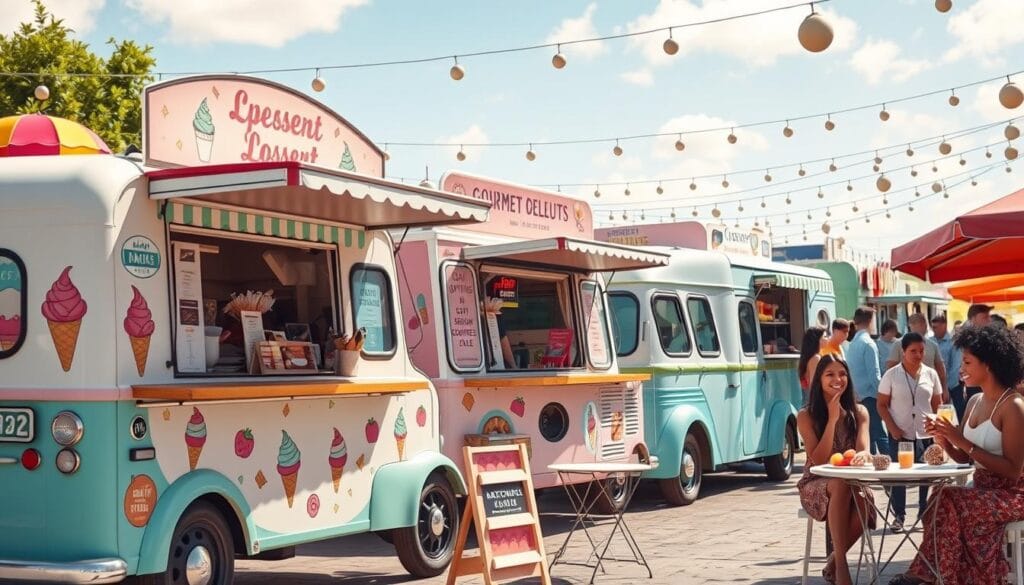
Starting a dessert-themed food truck could be very profitable. Dessert trucks are popular because they offer unique sweets. People love their sweet treats.
Popular Choices: Ice Cream, Donuts, and More
Dessert trucks can focus on many treats like ice cream, donuts, and gourmet cupcakes. These desserts are tasty and can make a lot of money because they cost more.
- Ice Cream Trucks: Always a hit, ice cream trucks are perfect for warm weather.
- Donut Trucks: Fresh donuts can win over many fans.
- Gourmet Cupcake Trucks: Unique cupcakes with special flavors are a big draw.
Seasonal Desserts and Themes
Adding seasonal desserts and themes keeps your menu interesting. This approach attracts regular customers and keeps your offerings trendy.
Some seasonal ideas include:
- Summer: Cool ice creams and sweet desserts.
- Winter: Spiced treats like gingerbread and hot chocolate.
- Halloween: Spooky desserts, like candy corn cupcakes.
- Christmas: Holiday desserts, like gingerbread men and eggnog cheesecake.
Customization and Personalization
Letting customers customize their desserts makes their experience better. Offer different toppings, fillings, and flavors to make treats special.
For instance, a donut truck could have many glazes and toppings. An ice cream truck could let customers mix in their own flavors.
By focusing on popular desserts, seasonal themes, and customization, you can run a successful dessert truck. It will attract many customers.
Breakfast on Wheels
Breakfast on wheels is becoming a hit for its convenience and taste. Food trucks now offer breakfast items, specialty coffee, and smoothies. This way, they grab a big share of the morning market.
Breakfast Sandwiches and Wraps
Breakfast sandwiches and wraps are favorites in many food trucks. You can have everything from simple egg and cheese to fancy ones with bacon, sausage, and avocado. Using local ingredients is a big plus.
Some top breakfast sandwich and wrap ideas are:
- The “Morning Classic”: scrambled eggs, cheddar cheese, and choice of bacon or sausage on a toasted English muffin.
- The “Veggie Delight”: scrambled eggs, roasted vegetables, and feta cheese wrapped in a whole wheat tortilla.
- The “Meat Lover’s”: scrambled eggs, bacon, sausage, and cheddar cheese on a brioche bun.
Specialty Coffee and Smoothies
Adding specialty coffee and smoothies to your menu can draw in more customers. Try unique coffee drinks like flavored lattes or cold brews. Also, offer smoothies with fresh fruit and yogurt.
Catering to Morning Commuters
To succeed, focus on serving morning commuters. Place your truck near busy spots or outside offices. Offering a “commuter’s special” or discounts for regulars can help build a loyal customer base.
| Menu Item | Price | Ingredients |
|---|---|---|
| Morning Classic | $4.50 | Scrambled eggs, cheddar cheese, bacon or sausage, English muffin |
| Veggie Delight | $5.00 | Scrambled eggs, roasted vegetables, feta cheese, whole wheat tortilla |
| Caramel Latte | $3.50 | Espresso, steamed milk, caramel syrup |
By using low-cost mobile food vendor ideas and money-saving food truck operation tips, you can make more money. And you’ll serve tasty breakfasts to your customers.
Healthy Eating and Meal Prep Trucks
More people want to eat healthy and stay active. Meal prep trucks offer a quick and easy way to do this. They provide nutritious meals that are easy to grab and go.
Trend of Meal Prepping
Meal prepping is big in the health world. Folks want to eat well without spending too much time cooking. Meal prep trucks offer balanced meal options that are both healthy and quick.
These trucks are great because they have meals for everyone. You can find vegan, gluten-free, and low-carb options. This makes them popular with lots of people.
Balanced Menu Options
Good meal prep trucks have a variety of meals. Their menus include protein-rich dishes, complex carbohydrates, and healthy fats. This ensures customers get a balanced meal.
- Grilled chicken with quinoa and vegetables
- Salads with lean proteins and nuts
- Whole grain wraps with lean meats and vegetables
Collaborating with Fitness Communities
Many meal prep trucks team up with local gyms and fitness groups. This partnership helps promote the trucks and attracts health-conscious people.
Together, meal prep trucks and gyms can offer special deals. For example, discounts for gym members or meal and fitness packages. This helps both sides and shows the trucks’ dedication to health.
For instance, a meal prep truck might work with a yoga studio. They could offer a “yoga and meal prep” package at a lower price for studio members. This builds a loyal customer base and boosts the trucks’ reputation.
Partnering with Local Farms and Producers
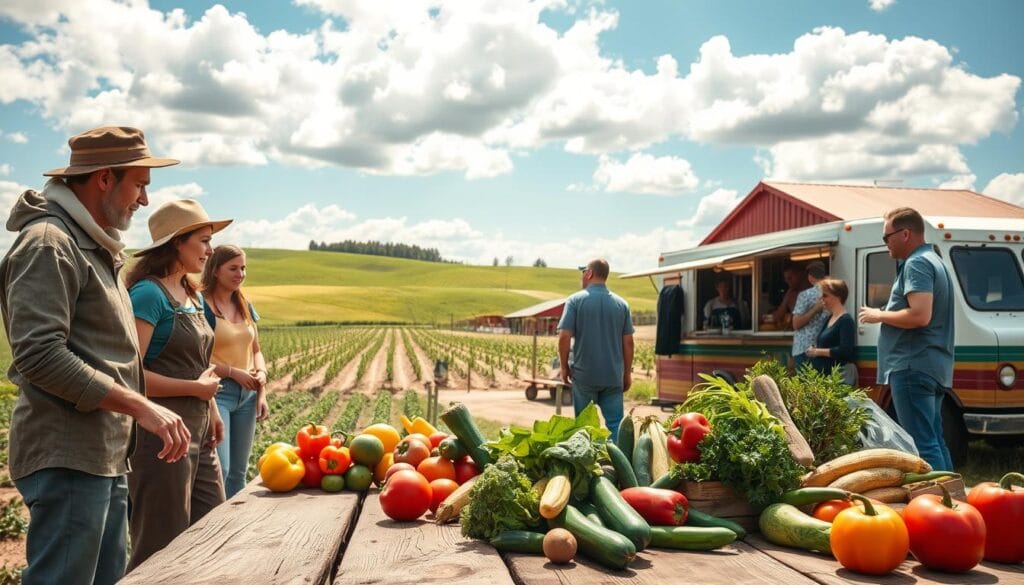
Working with local farms and producers can make your food truck business better. You get fresher ingredients and build stronger ties with the community. This also helps your menu and supports the local economy.
Benefits of Farm-to-Table Initiatives
Farm-to-table projects bring many advantages. They offer fresher ingredients and support local farming. This unique approach can set your business apart in a crowded market.
- Improved ingredient quality due to reduced transportation time
- Enhanced menu uniqueness through seasonal produce
- Stronger community relationships through local sourcing
Seasonal Menus Based on Local Produce
Menus that change with the seasons ensure freshness and keep things interesting. This approach attracts customers who want new experiences.
For instance, summer menus might include fresh corn and heirloom tomatoes. Winter menus could feature root vegetables and squash.
Building Community Relationships
Working with local farms and producers helps build strong community relationships. By using local ingredients, you show you care about the community. This builds loyalty among your customers.
Working with local farmers and producers also opens up chances for marketing together and hosting events. This boosts your business’s reputation and visibility.
By using these strategies, you can make a budget-friendly mobile food business plan that works well. It’s sustainable and attracts customers. This fits with affordable food truck startup strategies that focus on local sources and community involvement.
Eco-Friendly and Sustainable Practices
In today’s world, small budget food truck enterprises can stand out by going green. People are now willing to pay more for food that’s good for the planet.
Reducing Waste in Your Operations
One easy way to be more sustainable is to cut down on waste. Use biodegradable or compostable packaging instead of plastic. Also, plan your menu and inventory well to avoid food waste.
For more tips on setting up a sustainable food truck, check out this guide on sustainable food truck setup.
Sourcing Sustainable Ingredients
Buying ingredients from local, sustainable sources helps the local economy and the planet. Add seasonal and locally sourced produce to your menu to attract eco-conscious customers.
Marketing Your Eco-Friendly Commitment
After starting eco-friendly practices, it’s key to share your efforts. Use social media to show off your green initiatives. This will attract customers who care about the environment.
By going green, your food truck can gain a better reputation. This attracts more customers and helps your economical food truck menu concepts succeed in the long run.
Leveraging Social Media for Marketing
Social media is key for food truck marketing. It helps you reach more people and boost sales. By being active online, you can build a loyal fan base and succeed in the food truck world.
Building an Online Presence
To have a strong online presence, make profiles on Instagram, Facebook, and Twitter. Post high-quality images of your food and talk to your followers. Keep your branding and tone the same across all platforms.
Include important details like where you are, when you’re open, and what you serve. Use hashtags like #foodtruck to get noticed. This helps attract new followers.
Engaging with Your Audience
It’s important to talk to your followers. Answer their comments and messages. Ask for feedback to learn what they like.
Share behind-the-scenes stuff like kitchen prep or new menu items. This makes your brand more personal and relatable.
Promoting Special Events and Deals
Social media is great for sharing special offers. Make a big deal about your food truck with limited-time deals or exclusive items. Partner with influencers or local businesses to reach more people.
When you post about events or deals, include clear calls-to-action. Use analytics to see how your posts are doing. This helps you improve your marketing.
By using social media well, you can save money and grow your business. It’s a smart way to promote your food truck.
Scaling Your Food Truck Business
As your food truck becomes more popular, you might want to grow your business. This could mean starting more trucks, franchising, or expanding your reach. To grow, you’ll need to find new markets and make your menu easier to produce in large quantities.
Expansion Strategies
You can find new places to sell your food, like events or catering. Think about teaming up with local businesses for special deals. For example, Kogi BBQ in Los Angeles grew by adding more trucks and working with breweries.
Franchising or Multiple Trucks
Franchising your truck can help you grow without managing each one. Or, you could run multiple trucks to reach more people. But, you’ll need a solid plan and good management to make it work.
Financial Considerations for Growth
Expanding your food truck business needs smart money planning. You’ll face costs for more equipment, staff, and marketing. Keeping a close eye on your finances is key to growing without breaking the bank.