
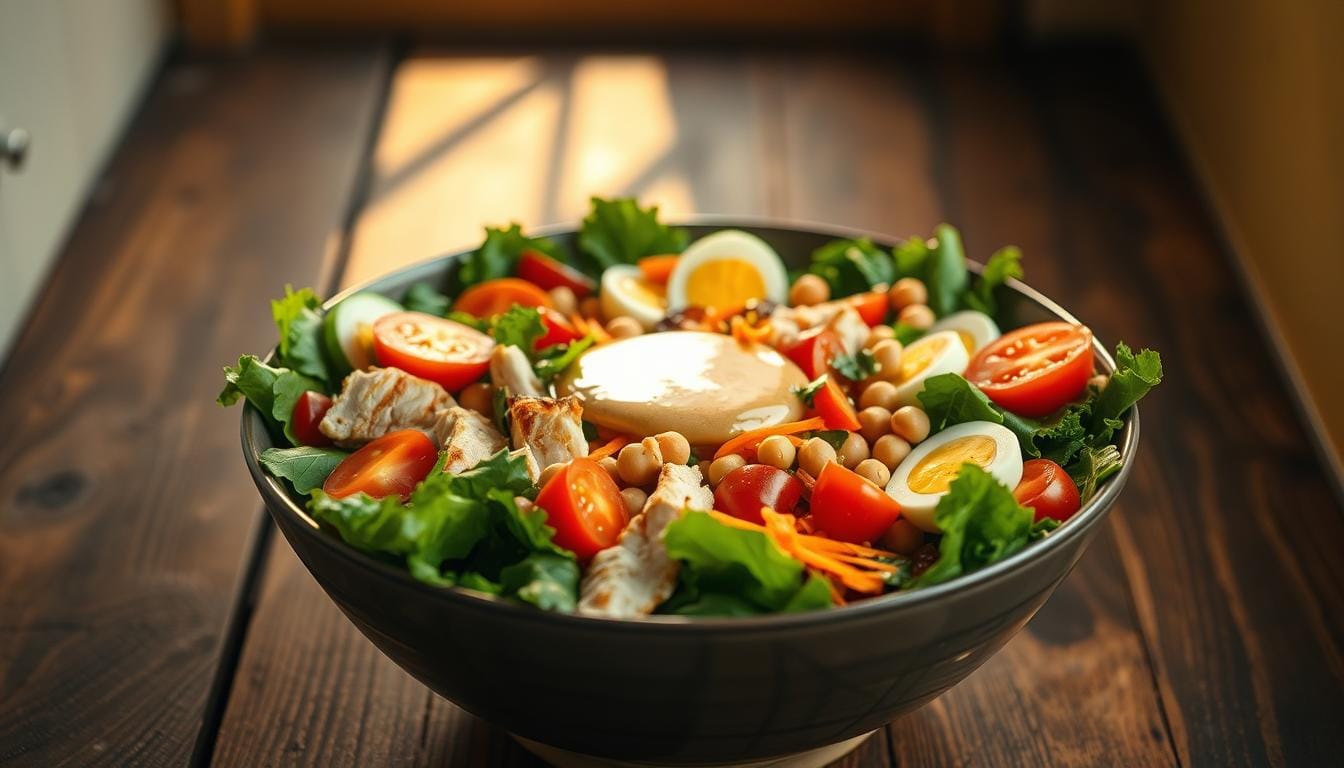
“Let food be thy medicine and medicine be thy food.” – Hippocrates
In today’s fast-paced world, maintaining a healthy diet can feel challenging. However, incorporating nutrient-rich meals into your routine can be both simple and satisfying. One way to achieve this is through delicious and wholesome recipes that focus on fresh ingredients.
Salads are not just a side dish; they can be the centerpiece of your meals. By combining various sources of protein, such as beans, nuts, and lean meats, you can create a dish that keeps you energized and full. The versatility of salads allows for endless combinations, ensuring you never get bored.
This article will guide you through a variety of recipes designed to elevate your meals. From animal-based to plant-based options, there’s something for everyone. You’ll discover practical tips for meal prep, flavorful dressings, and how to customize each recipe to fit your lifestyle.
Table of Contents
Introduction to High Protein Salad Bowls: Why They Matter for Your Healthy Diet
Finding the right balance in your meals can sometimes be a challenge. You might have experienced the frustration of finishing a salad only to feel hungry again shortly after. This is precisely why focusing on high protein options is essential.
When you add enough protein to your salad, it transforms from a light side dish into a satisfying meal. This helps fuel your body for hours, keeping you energized throughout the day.
Protein serves as the building block of life. It is crucial for producing energy and maintaining biological processes. Additionally, it stabilizes blood sugar levels by slowing down carbohydrate absorption.
Incorporating both animal and plant-based protein sources creates a balanced meal. This supports muscle repair and overall health, making your salad not just a mix of greens but a nutrient-rich dish.
High protein salads are a fantastic way to increase your vegetable intake while meeting your daily protein needs. They are perfect for lunch or dinner, providing sustained energy without the post-meal crash often associated with carb-heavy meals.
A well-constructed high protein salad keeps cravings at bay. It helps you stay on track with your healthy eating goals. The versatility of these salads allows you to enjoy different flavors throughout the week without getting bored.
By prioritizing protein in your meals, you are making a smart choice for long-term health, weight management, and overall well-being. This introduction sets the stage for understanding how to build, customize, and enjoy high protein salads that truly satisfy.
Understanding Protein and Fiber: The Building Blocks of a Satisfying Salad Bowl
The foundation of a satisfying meal lies in the right balance of nutrients. To create a fulfilling dish, you need to focus on two critical components: protein and fiber. These nutrients work together to keep you feeling full and satisfied.
Protein is essential for building and repairing your cells, tissues, and organs. It also plays a vital role in stabilizing blood sugar levels by slowing carbohydrate absorption. Without adequate protein in your meal, you may find yourself feeling hungry again within a short time, which can undermine your healthy eating efforts.
Fiber is equally important. It supports healthy digestion, helps decrease cholesterol, and improves blood sugar control. When you include fiber-rich foods in your meals, you contribute to better overall health and reduce the risk of chronic diseases.
A salad that combines both protein and fiber creates a powerful combination for sustained energy and appetite regulation. Here are some good sources of each:
| Source | Type | Protein (grams per serving) | Fiber (grams per serving) |
|---|---|---|---|
| Chicken Breast | Animal | 26 | 0 |
| Chickpeas | Plant | 15 | 12 |
| Quinoa | Grain | 8 | 5 |
| Broccoli | Vegetable | 4 | 5 |
| Almonds | Nuts | 6 | 3 |
By combining protein and fiber in your meals, you provide your body with the necessary tools to function optimally throughout the day. Research shows that diets rich in both nutrients are associated with a decreased risk of heart disease, stroke, and diabetes.
Think of protein and fiber as the building blocks that can transform a simple bowl of greens into a truly satisfying and nutritious meal. Understanding this foundation will help you make better choices when selecting ingredients for your high protein salads moving forward.
Building the Perfect High Protein Salad Bowl: Essential Ingredients and Components
Crafting a nutritious meal can be simple when you know the right ingredients to use. A well-balanced dish starts with a solid foundation. You can build the perfect salad by following a straightforward framework that includes various components.
1. Start with Greens: Begin with a base of leafy greens. Spinach, arugula, or romaine lettuce provide a nutrient-rich foundation. These greens add flavor and essential vitamins to your meal.
2. Add Colorful Veggies: Chop up a variety of vegetables. You can throw them in raw for crunch or roast them for sweetness. Options like bell peppers, cucumbers, and carrots not only enhance the flavor but also boost the fiber content.
3. Choose Your Protein: Incorporate a quality protein source. Grilled chicken, beef, or salmon work well. If you prefer plant-based options, consider beans, eggs, tofu, or nuts. These ingredients provide staying power and keep you satisfied longer.
4. Mix in Carbohydrates: For extra heartiness, include a whole grain or starch. Brown rice, quinoa, and farro make your meal more filling and nutritious.
5. Craft a Dressing: A good dressing ties everything together. Experiment with alcohol-free vinaigrettes, creamy yogurt-based dressings, or tahini sauces to enhance the flavors.
6. Finish with Toppings: Get creative with crunchy toppings. Nuts, seeds, fresh herbs, or a sprinkle of cheese can add texture and excitement to each bite.
The key to a successful salad is balancing flavors, textures, and colors. Aim to include at least one ingredient from each category. This approach ensures your meal is nutritionally complete and satisfying.
Remember, this flexible framework allows you to mix and match ingredients based on what you have on hand. You can create endless variations to keep your meals interesting.
Plant-Based Protein Options for Your Salad Bowls
Exploring plant-based protein options can open up a world of flavors and nutrition for your meals. You can create incredibly satisfying high protein salad bowls using only plant-based sources that are both nutritious and delicious.
Tofu and tempeh are excellent soy-based options. They absorb flavors well and provide a substantial protein boost to any dish. These ingredients are versatile and can be marinated or grilled to enhance their taste.
Lentils are another powerhouse ingredient. They offer approximately 18 grams of protein per cup, along with a healthy dose of fiber to keep you full. Adding lentils to your salads not only boosts the protein content but also adds a hearty texture.
Beans and legumes, such as chickpeas, black beans, and kidney beans, are versatile and affordable. They are packed with plant-based protein, making them a great addition to your salads. Their creamy texture and mild flavor can complement various ingredients.
Quinoa is a complete protein, containing all nine essential amino acids. This makes it an ideal base or addition to your high protein salad. It adds a delightful crunch and a nutty flavor that enhances your meal.
Nuts and seeds like almonds, walnuts, pumpkin seeds, and sunflower seeds add crunch and healthy fats. They also contribute extra protein to your meal, making your salad even more satisfying.
You do not need any meat or animal products to achieve a high protein salad that satisfies your hunger and nutritional needs. Plant-based protein options are often rich in fiber, antioxidants, and phytonutrients that support overall health and well-being.
Incorporating a variety of these plant-based protein sources ensures you get a broad spectrum of nutrients in every salad bowl. You will find that these plant-based high protein salads are just as filling and flavorful as their animal-based counterparts when prepared thoughtfully.
Chicken-Based High Protein Salad Bowl Recipes
Chicken is a fantastic source of lean protein that can elevate your meals. This versatile ingredient can be grilled, shredded, or marinated, making it a staple in many kitchens. Here are some delicious chicken-based recipes that pack a protein punch and are perfect for any meal.
Pesto Chicken Salad with Avocado and Cherry Tomatoes
You will love the Pesto Chicken Salad with Avocado and Cherry Tomatoes. This delightful dish combines leafy greens, sweet cherry tomatoes, creamy avocado slices, spicy red onion slivers, and crumbly feta cheese. Toss it all together with a bright lemony dressing for a satisfying meal that delivers 28 grams of protein per serving.
This chicken salad works beautifully as a main dish for lunch or a light dinner. The combination of grilled chicken and healthy fats from the avocado makes it super filling.
Curry Chicken Salad with Spices and Greek Yogurt Dressing
The Curry Chicken Salad with Spices and Greek Yogurt Dressing proves you do not need mayonnaise to create a creamy, flavorful chicken salad. This recipe delivers 27 grams of protein per serving. Greek yogurt provides a rich texture while Dijon mustard, lemon juice, and vinegar add tangy depth. Dried cranberries contribute a touch of sweetness, making this dish irresistible.
You can prepare this salad ahead of time, making it an excellent option for meal prep days when you need quick, high-protein lunches.
Mandarin Chicken Salad with Walnuts and Honey-Lime Vinaigrette
The Mandarin Chicken Salad with Walnuts and Honey-Lime Vinaigrette comes together in just 20 minutes. This refreshing dish features quinoa, spinach, mandarin oranges, walnuts, and a sweet and tangy dressing, providing 27 grams of protein per serving. The mix of textures and flavors is complex, and you can add a drizzle of sriracha for an optional kick of heat.
Chicken Avocado Salad for Leftovers and Quick Meals
The Chicken Avocado Salad for Leftovers and Quick Meals is your go-to recipe when you have leftover veggies in the fridge. This dish creates a delicious, no-waste meal with 19 grams of protein per serving. It includes corn, olives, tomatoes, and cucumbers, but you can easily customize it with whatever ingredients you have on hand.
All four chicken-based recipes are designed to be satisfying, flavorful, and free from pork and alcohol, making them perfect for your healthy diet.
Beef and Steak Salad Bowl Ideas
Beef and steak salad bowls are not just meals; they are an experience packed with flavor and nutrients. These hearty dishes are perfect for those days when you need a substantial protein boost. They combine fresh ingredients with the rich taste of beef, making them a satisfying option for lunch or dinner.
Each recipe below highlights the incredible versatility of beef in salads. You can enjoy these meals any day of the week, and they are designed to keep you full and energized.
California Steak Salad with Chimichurri Dressing
The California Steak Salad with Chimichurri Dressing is a true delight. This dish features tender grilled flank steak served on a bed of greens. You’ll find grilled onions, asparagus, avocado, and cherry tomatoes complementing the steak. This vibrant combination delivers an impressive 36 grams of protein per serving.
What makes this salad stand out is the tangy, herb-packed chimichurri dressing. It is completely alcohol-free and adds vibrant flavor to every bite.
Thai Beef Salad with Tangy Dressing and Toasted Rice Powder
Next up is the Thai Beef Salad with Tangy Dressing and Toasted Rice Powder. This dish hits all the right notes with its slightly spicy profile and the unique crunch of toasted rice powder. It provides 27 grams of protein per serving and is packed with fresh herbs and crisp veggies.
You can throw this salad together in just half an hour, making it a perfect choice for a quick, nutritious meal.
Cajun-Spiced Steak Salad with Creamy Garlic Ranch
The Cajun-Spiced Steak Salad with Creamy Garlic Ranch is a tasty option that feels indulgent. Featuring perfectly cooked medium-rare steak and rich soft-boiled eggs, this salad offers 36 grams of protein per serving. The creamy garlic ranch dressing adds a delicious touch.
This dish is Whole30-approved, delivering a steakhouse vibe while remaining completely paleo-friendly.
Steak Salad with Crispy Potatoes and Sweet Corn
Lastly, the Steak Salad with Crispy Potatoes and Sweet Corn combines juicy steak with crispy potatoes and sweet corn. This complete meal in one bowl offers 19 grams of protein per serving. The creamy homemade dressing ties all the flavors together beautifully.
Each of these beef and steak salad recipes is designed to be satisfying and nutritious. They keep you full without any pork or alcohol products, making them great for your healthy diet.
You can easily incorporate these steak salad ideas into your meal prep routine. Cook the steak ahead of time and assemble the bowls when you’re ready to eat.
| Recipe | Protein (grams per serving) | Prep Time (minutes) |
|---|---|---|
| California Steak Salad | 36 | 20 |
| Thai Beef Salad | 27 | 30 |
| Cajun-Spiced Steak Salad | 36 | 25 |
| Steak Salad with Crispy Potatoes | 19 | 15 |
Seafood Salad Bowls for Protein and Omega-3 Boost
If seafood is your preference, these salad recipes will delight your taste buds. Seafood salads are not only delicious but also packed with high-quality protein and omega-3 fatty acids. These nutrients are essential for supporting heart and brain health.
Grilled Shrimp Salad with Quinoa and Roasted Asparagus
This vibrant salad features marinated and grilled shrimp, hearty quinoa, quick-cooked broccoli, and oven-roasted asparagus. It delivers 28 grams of protein per serving. This grilled shrimp salad is perfect for busy summer weeknights when you want a healthy, satisfying meal without spending hours in the kitchen.
Tuna Salad Bowl with Avocado and Quinoa
The Tuna Salad Bowl with Avocado and Quinoa is a delicious option for meal prepping. Spiralized cucumbers add a unique touch, while a tangy, savory dressing stores well, providing 24 grams of protein per serving. You can use canned tuna for convenience, making it an accessible and affordable option for your healthy diet.
Easy Salmon Salad with Chickpeas and Cucumber
The Easy Salmon Salad with Chickpeas and Cucumber comes together in just 15 minutes. It features skillet-cooked salmon atop a crunchy cucumber chickpea salad, delivering an impressive 36 grams of protein per serving. This dish is a gluten-free meal prep win that feels special enough for a weekend dinner but is easy enough for a busy weeknight.
Smoked Salmon Salad with Rice Vinegar Dressing
This salad resembles a tasty sushi bowl, full of good fats and vegetables. The tangy garlic rice vinegar dressing perfectly complements the smoky fish, offering 19 grams of protein per serving. It’s a flavorful option that will keep you satisfied.
Detox Shrimp Salad with Grilled Romaine and Lime
The Detox Shrimp Salad features grilled romaine, tomatoes, shrimp, avocado, cilantro, and lime. This light, fresh summer meal has a smoky char and delivers 27 grams of protein per serving. It’s a delightful way to enjoy seafood while nourishing your body.
All five seafood salad recipes are completely free from pork and alcohol, focusing instead on fresh, clean ingredients that nourish your body.
Vegetarian and Vegan High Protein Salad Bowls
Vegetarian and vegan options can be just as fulfilling and rich in nutrients as their meat-based counterparts. Don’t underestimate the power of plant-based ingredients; they can deliver impressive nutrition and flavor. Here are some delicious recipes that showcase how satisfying these salads can be.
Lentil Salad with Roasted Cauliflower and Mushrooms
This delightful salad combines lentils, roasted cauliflower, and mushrooms with a simple mustard dressing. It packs in 18 grams of protein per serving. The humble ingredients come together to create a surprisingly addictive dish.
Protein-Packed Hummus Veggie Salad
The Protein-Packed Hummus Veggie Salad requires no oven and no soy or fake meat products. It delivers an impressive 31 grams of protein per serving from whole, plant-based foods. This salad is perfect for meal prep, making it an ideal on-the-go lunch.
Brown Rice Salad with Chickpeas, Kale, and Beets
This salad features an orange ginger dressing and can be enjoyed cold or warm. It provides 14 grams of protein per serving along with plenty of fiber. The combination of chickpeas, kale, and beets makes it a colorful and nutritious choice.
Creamy Chickpea Kale Salad with Tahini Dressing
The Creamy Chickpea Kale Salad includes crispy chickpeas and a creamy tahini dressing. It delivers 22 grams of protein per serving and feels indulgent while being vegan and gluten-free. You can throw this salad together in just 30 minutes for a quick weeknight dinner.
Warm Roasted Veggie Lentil Salad with Maple Balsamic Dressing
This warm salad is perfect for chilly weather. It features roasted vegetables and soft green lentils, providing 19 grams of protein per serving. The easy maple balsamic dressing ties all the flavors together beautifully.
All five vegetarian and vegan high protein salad bowl recipes are completely free from pork and alcohol. They rely on plant-based ingredients to deliver exceptional flavor and nutrition.
| Recipe | Protein (grams per serving) | Prep Time (minutes) |
|---|---|---|
| Lentil Salad with Roasted Cauliflower | 18 | 15 |
| Protein-Packed Hummus Veggie Salad | 31 | 10 |
| Brown Rice Salad with Chickpeas | 14 | 20 |
| Creamy Chickpea Kale Salad | 22 | 30 |
| Warm Roasted Veggie Lentil Salad | 19 | 25 |
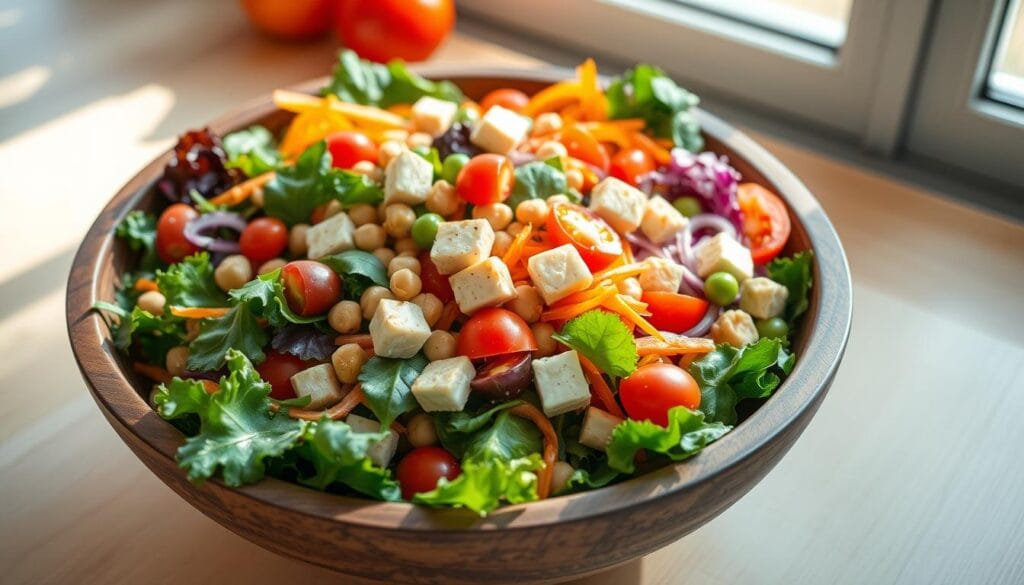
Whole Grains and Carbohydrates to Boost Satiety in Your Salad Bowls
To enhance the satisfaction of your meals, consider adding whole grains and complex carbohydrates. These ingredients not only provide a heartier texture but also contribute to lasting energy throughout the day.
Brown rice is an excellent addition to your dishes. It offers a chewy texture and nutty flavor while contributing fiber and essential nutrients. This makes it a great choice for transforming your meals into something more substantial.
Quinoa stands out as a complete protein. It contains all nine essential amino acids, making it a perfect carbohydrate choice for boosting both protein and satiety in your meals. This versatile grain can easily complement a variety of ingredients.
Farro adds a pleasantly chewy texture and earthy flavor to your dishes. It also provides a good dose of fiber, helping to keep you full for hours. This ancient grain is a wonderful way to diversify your meals.
You can also use starchy vegetables like roasted sweet potatoes or winter squash. These options add natural sweetness and creaminess to your high protein salad. Their flavors blend well with various ingredients, enhancing your overall dining experience.
Lentils and beans serve double duty as both protein sources and complex carbohydrates. They are incredibly efficient ingredients for building satisfying meals. Incorporating them into your dishes can elevate both nutrition and taste.
Whole grains help stabilize blood sugar levels and provide steady energy. This complements the satiating effects of the protein in your meal. By including these ingredients, you create a balanced dish that supports your healthy eating goals.
Consider batch-cooking grains like quinoa, brown rice, or farro during your meal prep sessions. This way, they are ready to add to your salads throughout the week, saving you time while enhancing your meals.
The combination of protein, fiber-rich veggies, and whole grains creates a nutritionally complete meal. This not only supports your healthy diet but also keeps cravings at bay. Experimenting with different grains and starches allows you to vary the texture and flavor profile of your high protein salads while maintaining their filling quality.
Flavorful Alcohol-Free Dressings and Toppings to Elevate Your Salad Bowls
Enhancing your meals can be as simple as choosing the right dressing and toppings. A good dressing not only brings flavors together but also makes your dish more enjoyable. To truly elevate your meal, consider moving beyond a basic vinaigrette. There are many creative and delicious options available.
Making your own dressings at home is a great way to avoid hidden unhealthy fats and additives found in many store-bought options. Plus, it’s quite simple! Here are some ideas to get you started:
- Lemon Vinaigrette: Combine fresh lemon juice, olive oil, Dijon mustard, and a touch of honey for a bright, alcohol-free dressing that complements almost any dish.
- Creamy Dressings: Use Greek yogurt, tahini, or mashed avocado as a base. These options provide richness without the need for unhealthy ingredients.
- Herb-Infused Dressings: Experiment with fresh herbs like basil, cilantro, dill, and parsley. These can create vibrant dressings that enhance the natural flavors of your ingredients.
In addition to dressings, crunchy toppings can add texture and interest to your meal. Here are some tasty ideas:
- Seasoned Nuts and Seeds: These add healthy fats, protein, and fiber. Consider almonds, walnuts, or sunflower seeds for a delightful crunch.
- Crispy Chickpeas: Roasted chickpeas can be a fantastic topping, providing both crunch and additional protein.
- Pickled Vegetables: Adding pickled veggies can introduce a tangy flavor that brightens your dish.
- Cheese Sprinkles: A sprinkle of feta, goat cheese, or Parmesan can add a savory umami element that pairs well with both animal and plant-based proteins.
- Fresh or Dried Fruits: Fruits like mandarin oranges, dried cranberries, or sliced apples can add natural sweetness, balancing tangy dressings and savory proteins.
It’s wise to prepare your dressings in advance during meal prep sessions. This way, they are ready to drizzle over your dishes throughout the week. The right combination of alcohol-free dressing and thoughtful toppings can transform even the simplest meal into a crave-worthy experience.
Here’s a quick summary of some flavorful dressing and topping options:
| Dressing/Topping | Key Ingredients | Flavor Profile |
|---|---|---|
| Lemon Vinaigrette | Lemon juice, olive oil, Dijon mustard, honey | Bright and tangy |
| Creamy Avocado Dressing | Mashed avocado, yogurt, garlic | Rich and smooth |
| Herb-Infused Dressing | Fresh herbs, olive oil, vinegar | Fresh and vibrant |
| Crunchy Nuts | Almonds, walnuts, sunflower seeds | Nutty and crunchy |
| Crispy Chickpeas | Chickpeas, olive oil, spices | Crunchy and savory |
Meal Prep Tips for High Protein Salad Bowls: Save Time Without Sacrificing Flavor
Preparing meals in advance can simplify your week and enhance your dining experience. By dedicating just half an hour on Sunday, you can set yourself up for success during busy weekdays. This small investment of time pays off by making healthy eating easier.
The most effective meal prep strategy is to prepare individual components rather than fully assembled salads. This keeps ingredients fresh and prevents sogginess. You can cook a batch of grains like quinoa or brown rice, chop a variety of veggies, and prepare your protein sources in advance.
Grilled chicken, steak, or salmon can be cooked ahead of time and stored in the refrigerator for up to four days. This makes it easy to assemble satisfying meals in minutes. Additionally, hard-boiled eggs, roasted vegetables, and cooked lentils or beans are excellent make-ahead ingredients that hold up well in the fridge throughout the week.
You can also prepare alcohol-free dressings in advance and store them in sealed containers. This way, they are ready to drizzle over your meals whenever you need a quick option. Washing and drying leafy greens ahead of time helps maintain their crispness, making assembly faster on busy days.
Portioning out nuts, seeds, and other toppings into small containers prevents overuse and keeps your meals balanced. This component-based meal prep approach allows you to mix and match ingredients throughout the week, ensuring variety in your high protein salads.
By investing a small amount of time in meal prep, you ensure that a nutritious, satisfying lunch or dinner is always within reach. This supports your healthy diet goals while keeping your meals enjoyable.
How to Customize Your Salad Bowl to Match Your Taste and Nutritional Needs
Personalizing your meal can transform a simple dish into a delightful culinary adventure. You have complete freedom to customize your high protein salad to match your personal taste preferences and dietary needs. The possibilities are endless, so don’t just throw together some greens and call it a day.
Start by choosing your favorite leafy green base. Whether it is spinach, arugula, romaine, kale, or a mix of several greens, each option brings its own flavor and texture. Next, consider swapping protein sources based on your preferences. You might enjoy chicken one day, salmon the next, and plant-based options like chickpeas or tofu on other days.
Adjust the carbohydrate component by selecting from quinoa, brown rice, farro, roasted sweet potatoes, or lentils. This choice can depend on your energy needs and taste. Additionally, experimenting with different alcohol-free dressings can completely change the flavor profile of your dish. Try tangy lemon vinaigrette, creamy tahini, or Greek yogurt-based options to keep things interesting.
Feel free to add more veggies for extra fiber and nutrients. You can also increase the protein portion on days when you need more satiety and muscle support. Seasonal ingredients can inspire your customization. For example, fresh berries in summer, roasted squash in fall, or citrus fruits in winter can enhance your dish.
If you have dietary restrictions, adapting any high protein salad recipe is easy. You can substitute ingredients to make it gluten-free, dairy-free, or vegan. The key to successful customization is balancing flavors, textures, and colors. This ensures that your meal is both nutritious and genuinely enjoyable to eat.
By learning to customize your salad bowls, you ensure that healthy eating never feels restrictive. Instead, it fits your unique lifestyle and preferences.
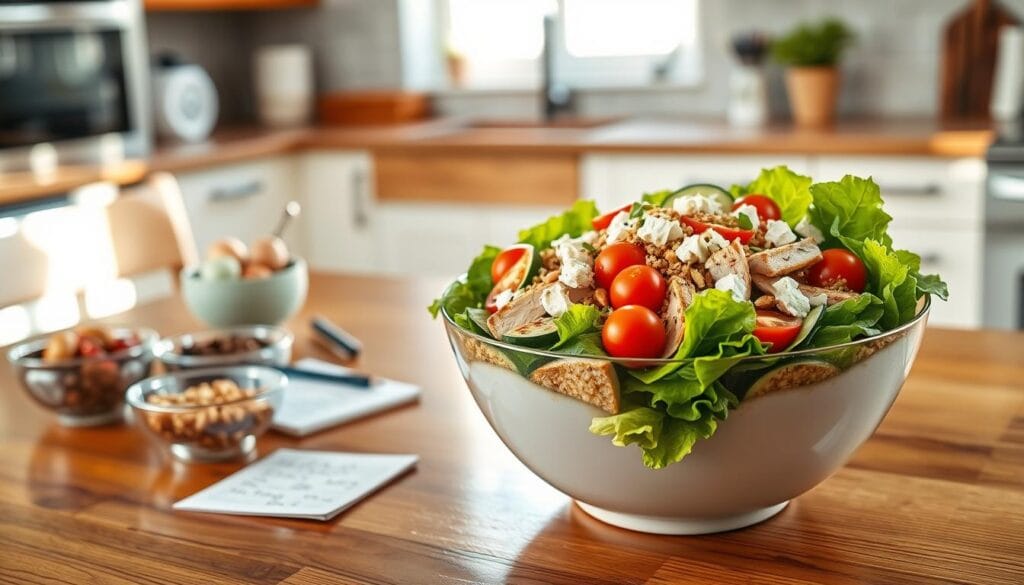
Tips for Balancing Macros: Protein, Fiber, and Healthy Fats in Your Salad Bowls
Creating a balanced meal requires careful consideration of protein, fiber, and healthy fats. Without these essential nutrients, you may find yourself hungry shortly after eating. Incorporating the right ingredients into your meals can help you feel satisfied for longer periods.
Here are some tips to achieve a well-balanced meal:
- You need to balance protein, fiber, and healthy fats in your salad bowl to create a truly satisfying meal that keeps you full and energized for hours.
- Aim for at least 20 to 30 grams of protein per serving in your high protein salad bowl to support muscle repair, stabilize blood sugar, and promote satiety.
- Include a variety of fiber-rich vegetables, legumes, and whole grains to support healthy digestion, lower cholesterol, and improve blood sugar control.
- Healthy fats from sources like avocado, nuts, seeds, and olive oil-based dressings are essential for nutrient absorption and long-lasting fullness.
- You should aim to fill half your salad bowl with vegetables, one quarter with protein, and the remaining quarter with whole grains or starchy vegetables for optimal macro balance.
- Adding a serving of avocado not only contributes healthy monounsaturated fats but also provides fiber and potassium to support overall health.
- Be mindful of portion sizes for calorie-dense toppings like nuts, seeds, and cheese, as they are nutritious but can add up quickly if not measured.
- A well-balanced high protein salad bowl should leave you feeling satisfied for three to four hours without experiencing energy crashes or cravings.
- You can adjust the macro ratios based on your activity level, with more carbohydrates on training days and more healthy fats on rest days.
- Learning to balance macros in your salad bowls ensures that each meal supports your health goals while keeping you full and nourished.
Incorporating High Protein Salad Bowls Into Your Healthy Diet Plan for Sustained Energy
Integrating nutritious meals into your daily routine can be a rewarding experience. You can seamlessly incorporate high protein salad bowls into your healthy diet plan as satisfying lunches, light dinners, or post-workout meals that support sustained energy.
Eating a protein-rich salad for lunch helps you avoid the mid-afternoon energy slump that often leads to unhealthy snacking and cravings. These meals are not only delicious but also packed with essential nutrients.
High protein salad bowls are an excellent choice for dinner because they are light enough to promote good sleep while still providing the nutrients your body needs for overnight repair. You can use these dishes as a strategic part of your meal prep routine, ensuring you always have a nutritious option ready when time is short.
Rotating through different protein sources throughout the week ensures you get a variety of nutrients and prevents boredom with your healthy diet. This can include options like grilled chicken, beans, or tofu, offering endless combinations.
High protein salad bowls support your fitness goals by providing the amino acids necessary for muscle recovery and the carbohydrates needed to replenish energy stores. You will find that consistently including these meals in your diet helps regulate your appetite and reduces the temptation to reach for less nutritious convenience foods.
The fiber in these dishes supports digestive health and helps maintain steady blood sugar levels, contributing to consistent energy throughout the day. By making high protein salad bowls a regular part of your meal rotation, you establish a sustainable healthy eating pattern that does not feel restrictive or boring.
These meals are versatile enough to fit into any healthy diet plan, whether you are training for a race, managing your weight, or simply trying to eat more vegetables. With so many ways to enjoy them, you can keep your meals exciting and fulfilling.
| Meal Type | Protein Source | Serving Size (grams) |
|---|---|---|
| Lunch | Grilled Chicken | 150 |
| Dinner | Chickpeas | 200 |
| Post-Workout | Tofu | 100 |
| Snack | Hard-Boiled Eggs | 100 |
Common Mistakes to Avoid When Making High Protein Salad Bowls
Creating a delicious and nutritious meal can be more challenging than it seems. While salads might appear simple, crafting a truly satisfying one requires effort and thought. You want to avoid ending up with a boring bowl of greens. A vibrant and flavorful dish is far more appealing than a sad desk lunch.
Here are some common pitfalls to steer clear of when preparing your next meal:
- Insufficient Protein: Not including enough protein can lead to hunger shortly after eating. This undermines your healthy eating efforts. Aim for a solid protein source to keep you full.
- Bland Dressings: Skipping the dressing or using a flavorless one results in a dull meal. Always include a tasty, alcohol-free dressing that brings your ingredients together.
- Timing of Dressing: Adding dressing too early can ruin the texture of your dish. It causes greens to wilt and toppings to become soggy, especially when meal prepping.
- Overloading on Toppings: Adding too many calorie-dense toppings like cheese, nuts, and dried fruit without measuring can turn a healthy meal into a high-calorie one.
- Lack of Texture Variety: A monotonous meal can result from neglecting different textures. Always include something crunchy, something creamy, and something chewy.
- Single Vegetable Type: Using only one type of vegetable limits nutrients and visual appeal. A colorful mix of raw and roasted veggies is far more beneficial.
- Seasoning Neglect: Forgetting to season your protein and veggies can lead to blandness. Use herbs, spices, and salt to enhance the natural flavors.
- Store-Bought Dressings: Relying on store-bought dressings can introduce hidden sugars and unhealthy fats. Make your own simple dressings at home to avoid this.
- Assuming Healthiness: Not all salads are healthy by default. The quality and balance of your ingredients determine the nutritional value of your meal.
- Mindfulness Matters: By being aware of these common mistakes, you can ensure that every meal you prepare is delicious, satisfying, and supportive of your health goals.
Conclusion
Eating well can be an enjoyable journey when you embrace the variety of fresh ingredients available. Salads are not just a way to eat more vegetables; they offer numerous options for incorporating protein, whether through meat, seafood, beans, nuts, or tofu. The combinations are endless, allowing you to create meals that are both satisfying and flavorful.
You now have a comprehensive collection of recipes and strategies to transform your diet with delicious meals. From chicken and beef to plant-based options, there’s a dish for every taste and occasion. Remember, the key to a fulfilling meal lies in balancing protein, fiber, and healthy fats.
Utilize the creative dressings and toppings you’ve learned about to keep your meals exciting. With effective meal prep techniques, you can save time while ensuring nutritious options are always on hand. So, start experimenting and discover how enjoyable salads can be when they truly nourish your body!
For more ideas, check out our high-protein salad recipes to keep your meals interesting and satisfying.