
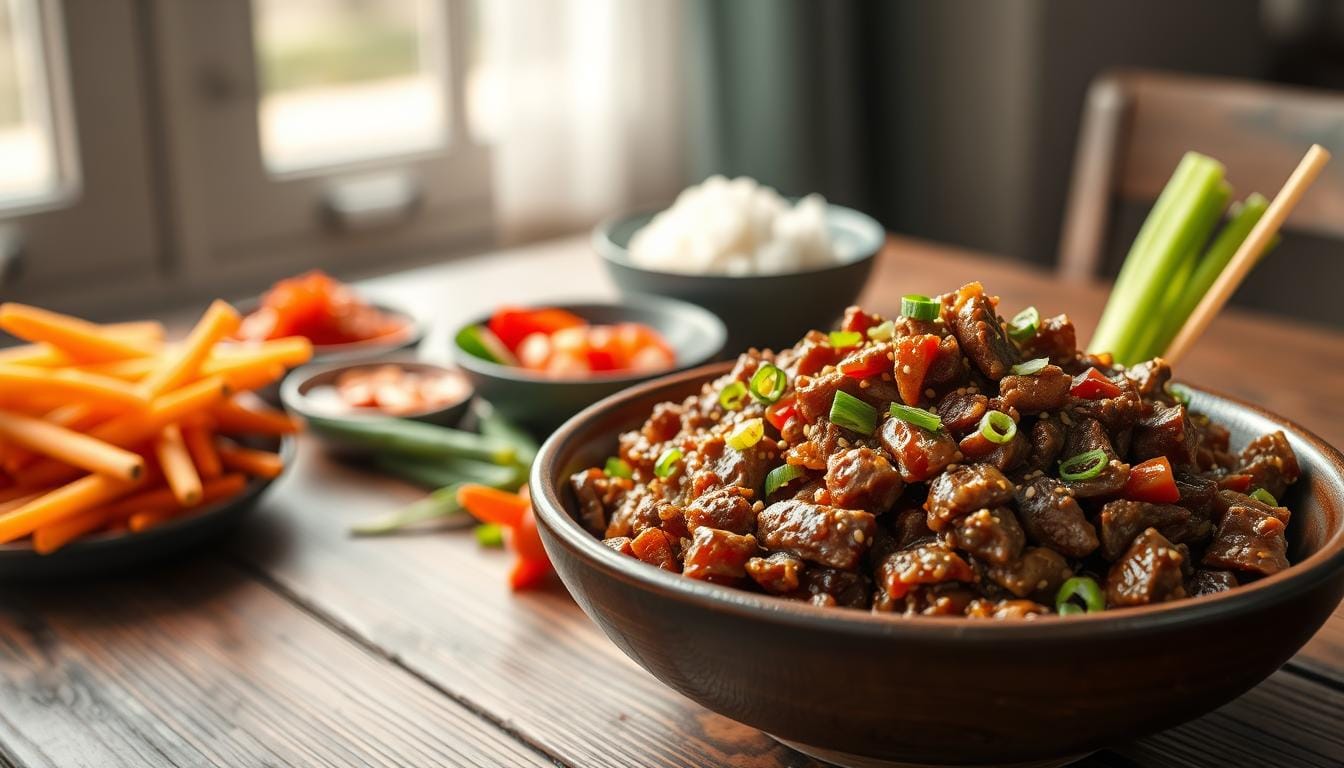
Imagine coming home after a long day, feeling the weight of the world on your shoulders. You want to prepare a meal that not only satisfies your hunger but also brings a sense of comfort and joy. This is where the magic of a korean ground beef bowl comes in. In just 20 minutes, you can create a dish that transforms simple ingredients into a delightful experience for your family.
This recipe draws inspiration from traditional flavors, using healthy ingredients like ginger, garlic, and sesame oil. It’s a perfect blend of savory and sweet, appealing to both adults and children alike. The aroma that fills your kitchen as it cooks is enough to make anyone’s mouth water.
What’s more, this dish respects dietary preferences by avoiding pork and alcohol, ensuring everyone at the table can enjoy it. With minimal prep time and ingredients you likely already have, this meal is a lifesaver for those hectic weeknights when you crave something delicious yet easy to prepare.
Table of Contents
Understanding the Korean Ground Beef Bowl: A Perfect Weeknight Dinner
After a long day, you might crave a comforting meal that is both quick and satisfying. This dish stands out among other recipes thanks to its unique combination of soy sauce, sesame oil, ginger, and garlic. These ingredients create layers of umami-rich flavor that will delight your taste buds.
The concept takes inspiration from traditional bulgogi, which is typically made with thinly sliced beef marinated and grilled. However, this recipe adapts that idea for the modern home cook by using accessible ground beef. This way, you can enjoy the essence of Korean flavors without the hassle of marinating.
The magic of this dish lies in its sauce. It balances savory soy sauce with natural sweetness from honey or apple. This eliminates the need for excessive refined sugar often found in traditional recipes. You can enjoy a deeply flavorful meal without compromising on health.
This recipe exemplifies the ideal weeknight dinner. It requires no marinating time, uses just one skillet for easy cleanup, and comes together in roughly 20 minutes from start to finish. You’ll appreciate how quickly it can be prepared after a busy day.
Additionally, these beef bowls are inherently customizable. You can adjust the heat level with red pepper flakes or gochujang while keeping the core flavor profile intact. This versatility allows you to cater to your family’s preferences.
Importantly, this dish naturally avoids pork and alcohol. Instead, it relies on the deep flavors of toasted sesame oil, fresh aromatics, and umami-rich soy sauce. These ingredients build complexity without the need for those items, making it suitable for everyone.
By understanding the foundational elements of this dish, you empower yourself to experiment with different vegetables, bases, and garnishes. This way, you can maintain the essential character that makes it so beloved while adding your personal touch.
Essential Ingredients for Your Korean Ground Beef Bowl
When it comes to crafting a delightful meal, the right ingredients can make all the difference. This dish requires a few key components that not only enhance flavor but also contribute to a nutritious meal.
Choosing the Right Ground Beef
Start with lean ground beef, ideally 93% lean. This choice provides ample protein and flavor without excess fat. If you prefer, you can opt for different fat percentages based on your dietary needs.
For a healthier option, consider using grass-fed beef. It offers more omega-3 fatty acids and essential nutrients like iron and B12, enhancing the overall nutritional profile of your dish.
Key Flavor Components
The flavor of your meal hinges on a few essential ingredients:
- Low-sodium soy sauce: This adds savory depth without overwhelming saltiness.
- Toasted sesame oil: A must-have for its distinctive nutty aroma.
- Fresh garlic and ginger: These ingredients provide a warm, pungent kick.
- Honey: Use it for natural sweetness, avoiding refined sugars.
Grated onion and apple are secret weapons in this recipe. The onion releases juices that infuse the meat, while the apple adds a complex sweetness that sugar cannot replicate. Additionally, red pepper flakes introduce a controllable heat, perfect for those who enjoy a bit of spice.
Vegetables and Garnishes
To complete your dish, consider these classic vegetables and garnishes:
- Fresh green onions: The white parts can be cooked into the beef, while the green tops add a vibrant garnish.
- Shredded carrots and thinly sliced cucumbers: These add freshness and texture.
- Toasted sesame seeds: They provide a nutty finish and visual appeal.
This recipe is designed to be alcohol-free. Instead of wine or mirin, you can use rice vinegar for acidity and honey or apple for sweetness. The thoughtful selection of these ingredients ensures that your meal is both flavorful and wholesome.
| Ingredient | Benefits |
|---|---|
| Lean Ground Beef | High in protein, low in fat, rich in iron |
| Low-Sodium Soy Sauce | Reduces sodium intake while adding flavor |
| Toasted Sesame Oil | Provides a nutty flavor, essential for authenticity |
| Garlic and Ginger | Add warmth and depth to the dish |
| Grated Onion and Apple | Enhances flavor and adds natural sweetness |
| Red Pepper Flakes | Adds customizable heat |
| Green Onions | Fresh garnish and flavor enhancer |
| Shredded Carrots and Cucumbers | Adds freshness and crunch |
Preparing the Beef: Browning and Seasoning
The process of preparing your meat is essential for creating a flavorful dish that your family will love. To achieve that perfect balance of taste and texture, you’ll want to focus on browning and seasoning your meat properly.
Step-by-Step Browning
Start by heating a large skillet over medium-high heat. This step is crucial; a properly hot pan ensures that the meat sears rather than steams. This searing develops those desirable browned bits that contribute deep savory flavor.
Once the pan is hot, add your ground beef. Use a spatula or wooden spoon to break it into small, even crumbles. This technique allows every piece to brown and absorb the seasonings you’ll add later.
The browning process typically takes about five minutes. You’ll know it’s ready when no pink remains and the meat has developed a rich, caramelized exterior. This forms the flavor foundation of your beef bowls.
Halfway through cooking, add a splash of soy sauce and two-thirds of your sliced green onions. This addition allows these ingredients to meld with the meat as it finishes browning, creating an initial layer of seasoning.
Incorporating Aromatics
Once the meat is fully cooked, it’s time to incorporate aromatics. Stir in minced garlic and grated ginger, cooking them for just 30 seconds. This brief cooking time releases their aromatic oils without burning, which would introduce bitterness to the dish.
You’ll appreciate that this method uses no additional fats beyond what naturally renders from the beef. However, if you’re using very lean meat that tends to stick, a small amount of neutral oil can be added.
This step-by-step approach to browning and seasoning ensures that each component has its moment to shine. It builds complexity in layers rather than dumping everything into the pan at once.
Using a cast iron skillet not only provides excellent heat distribution for even browning but can also contribute a small amount of dietary iron to your meal. This is particularly beneficial for those managing iron levels.
Crafting the Flavorful Sauce Without Alcohol
After a hectic day, you deserve a meal that is easy to make yet rich in taste and comfort. The sauce is the heart of this dish, bringing together all the wonderful flavors. By using alternative ingredients, you can create a delightful sauce that respects dietary restrictions while enhancing the overall experience.
Sauce Ingredients
To create a beautifully balanced sauce, gather the following ingredients:
- Rice vinegar: Provides bright acidity.
- Honey: Adds natural sweetness.
- Freshly grated ginger: Offers warmth and depth.
- Red pepper flakes: Introduces a gentle background heat.
- Soy sauce: Delivers umami richness.
The absence of alcohol in this sauce is intentional. Rice vinegar steps in to provide the tangy notes that traditional recipes often achieve with mirin or cooking wine. This way, you can enjoy the authentic flavors without any compromise.
How to Combine Sauce with Beef
Start by whisking the sauce ingredients together in a small bowl while the beef browns. This pre-mixing allows the flavors to meld even before they hit the hot pan, saving you valuable time during cooking.
Once the beef is fully browned, pour the sauce directly over the meat. Let it simmer for about two minutes. During this time, the liquid will reduce slightly, concentrating the flavors and ensuring every morsel of beef is infused with the sauce.
The final crucial step is to stir in toasted sesame oil off the heat. This preserves its delicate nutty aroma and prevents bitterness, ensuring your dish has that unmistakable authentic fragrance.
You’ll notice that this sauce uses significantly less sugar than many traditional recipes. It relies on the natural sweetness of honey and the savory depth of soy sauce to create a balanced flavor profile. The combination of soy sauce and sesame oil forms the backbone of the sauce, making this dish taste far more complex than its short ingredient list suggests.
For those who enjoy a bit of spice, you can easily adjust the heat level by increasing the red pepper flakes or stirring in a teaspoon of gochujang for a deeper, fermented chili warmth.
| Ingredient | Function |
|---|---|
| Rice Vinegar | Provides acidity and tanginess |
| Honey | Adds natural sweetness |
| Ginger | Offers warmth and depth |
| Red Pepper Flakes | Adds customizable heat |
| Soy Sauce | Delivers umami richness |
| Toasted Sesame Oil | Enhances aroma and flavor |
Vegetables and Pickling: Adding Crunch and Acidity
Adding fresh vegetables can elevate your meal, giving it a delightful crunch and a burst of flavor. Incorporating quick pickled ingredients is an excellent way to enhance your dish, adding brightness and acidity that perfectly contrasts with the savory elements.
Quick Pickled Carrots and Cucumbers
To prepare quick pickled carrots and cucumbers, follow this simple process:
- In a medium bowl, combine 2 tablespoons of rice vinegar, 2 tablespoons of water, 1/2 teaspoon of sugar, and 1/2 teaspoon of kosher salt.
- Add shredded carrots and thinly sliced cucumbers to the bowl, tossing to coat them in the pickling liquid.
- Let the vegetables marinate while you prepare the rest of your meal. By the time your beef is browned and your sauce is simmered, the vegetables will be ready to use.
You’ll find that Persian cucumbers are ideal for this preparation due to their thin skin and crisp texture. English hothouse cucumbers also work well when sliced thinly.
Alternative Vegetable Options
Feel free to customize your dish with various fresh vegetables. Some great alternatives include:
- Radishes for a peppery bite.
- Edamame for added protein and color.
- Wilted spinach for a tender, nutrient-dense addition.
- Avocado slices to introduce creaminess and richness.
These pickled vegetables require no cooking or canning equipment, making them an accessible upgrade anyone can master on even the busiest weeknight. The contrast of warm beef, cool pickled vegetables, and room-temperature rice creates a dynamic and interesting meal experience.
| Vegetable | Benefits |
|---|---|
| Shredded Carrots | Adds sweetness and color |
| Thinly Sliced Cucumbers | Provides crunch and hydration |
| Radishes | Offers a peppery bite |
| Edamame | Enhances protein content |
| Wilted Spinach | Boosts nutrition and flavor |
| Avocado | Adds creaminess and healthy fats |
Cooking Your Korean Ground Beef Bowl
In the midst of a hectic week, a flavorful dinner can bring joy and comfort. This dish is not only quick to prepare but also visually appealing. You’ll start by assembling your meal, creating a beautiful and satisfying presentation.
Assembling the Dish
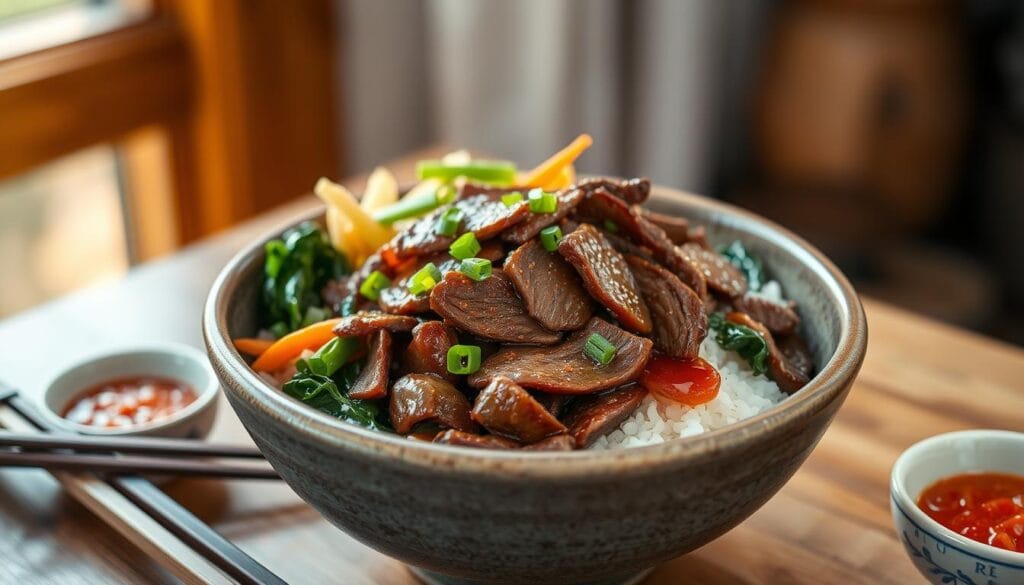
You’ll begin assembling your beef bowl by placing a generous scoop of steaming hot rice at the bottom of each bowl. This creates a warm foundation that will absorb the flavorful sauce from the meat.
The seasoned ground beef is spooned directly over the rice, allowing its savory juices to seep down and flavor every grain. This ensures that no bite is bland or dry.
Next, arrange your pickled vegetables, fresh garnishes, and any additional toppings around the beef in distinct sections. This presentation makes the meal feel special and restaurant-worthy.
A sprinkle of toasted sesame seeds and a handful of sliced green onions over the top adds the final flourish. These toppings contribute nutty crunch and fresh oniony brightness that ties all the components together.
For an extra layer of richness, consider topping each bowl with a fried egg. The runny yolk creates a luscious sauce that coats the beef and rice in velvety goodness.
You’ll find that serving the bowls with a simple drizzle sauce on the side—made from soy sauce, sesame oil, a touch of sugar, and rice vinegar—allows each person to customize the intensity of flavor to their liking.
These bowls are best enjoyed immediately while the beef is hot and the vegetables are cool and crisp. This delightful temperature contrast makes every bite engaging and satisfying.
Finally, this dish naturally encourages family-style dining. Everyone can gather around the table to build their own bowls, making it an interactive and enjoyable weeknight dinner experience.
Serving Suggestions
Serve the beef hot, over rice, topped generously with the carrots, cucumber, and sesame seeds. You can also serve over cauliflower rice for a lighter option.
Consider including avocado slices or pickled ginger as additional toppings. These not only enhance the flavor but also add vibrant colors to your dish.
Each bowl can be customized, allowing everyone to create their perfect meal. Enjoy the delightful mix of flavors and textures in every bite!
| Component | Purpose |
|---|---|
| Rice | Serves as the warm base that absorbs flavors |
| Ground Beef | Provides savory depth and protein |
| Pickled Vegetables | Adds crunch and acidity |
| Sesame Seeds | Offers nutty flavor and visual appeal |
| Green Onions | Enhances freshness and flavor |
| Fried Egg | Adds richness and creaminess |
Choosing the Right Base: Rice, Quinoa, or Cauliflower Rice
Choosing the right base for your meal can significantly enhance the overall dining experience. The base you select serves as the canvas for your dish, impacting both its nutritional profile and flavor. Here are some excellent options to consider:
Classic Brown or White Rice
Classic white rice, especially medium or short grain varieties like jasmine rice, offers a slightly sticky texture. This characteristic makes it easy to eat and perfect for absorbing the savory sauce from the meat. Brown rice, on the other hand, provides a nuttier flavor and chewier texture. It also comes with the benefits of whole grains, including more fiber, vitamins, and minerals. This makes your bowl more filling and nutritionally dense without sacrificing flavor compatibility.
Quinoa for Added Protein
Quinoa is an excellent high-protein alternative that cooks quickly. It adds a subtle earthy note to your meal, significantly boosting the protein content. This is especially beneficial for those looking to support muscle recovery or increase satiety. Quinoa’s versatility allows it to complement the flavors of your dish beautifully.
Cauliflower Rice for Low-Carb Meals
Cauliflower rice transforms this dish into a low-carb powerhouse. It reduces the carbohydrate content from approximately 45 grams per cup of rice to just 5 grams per cup. This makes it suitable for those following ketogenic, diabetic, or gestational diabetes meal plans. You can prepare cauliflower rice from scratch by pulsing raw cauliflower florets in a food processor or use convenient frozen cauliflower rice that reheats in minutes, saving you time on busy weeknights.
Each base option absorbs the flavorful sauce differently. Rice and quinoa soak up the juices readily, while cauliflower rice provides a lighter, more vegetable-forward foundation that lets the beef shine. You’ll appreciate having multiple base options in your repertoire, allowing you to adapt this dish to suit different family members’ preferences or to vary your meals throughout the week without repeating the same combination.
Tips for Customization and Substitutions
The beauty of cooking lies in the ability to adapt recipes to suit your tastes and dietary needs. This flexibility is especially important when making a delicious beef dish. Here are some effective tips to help you customize your meal while respecting dietary restrictions.
Gluten-Free Options
You can easily make this dish completely gluten-free by substituting tamari for regular soy sauce. This ensures that those with celiac disease or gluten sensitivity can enjoy the dish without compromise. Tamari provides a similar flavor profile without the gluten content.
No Alcohol or Pork: Staying True to Dietary Restrictions
This recipe is naturally free of pork and alcohol. The combination of rice vinegar, honey, and sesame oil provides all the acidity, sweetness, and depth you need without relying on mirin, cooking wine, or any pork-based products. You can enjoy a flavorful meal while adhering to dietary preferences.
Adding or Replacing Ingredients for Variety
Feel free to explore different options for your beef dish. Ground chicken or turkey can be substituted for the beef if desired. However, you may need to add a small amount of oil to the pan since poultry is leaner and can dry out more quickly during browning.
If you want to avoid soy entirely, consider using coconut aminos. This alternative is sweeter and less salty than traditional soy sauce, so you’ll want to adjust the added sweetener accordingly.
Additionally, you can add variety to your beef bowls by incorporating different vegetables each time you make the recipe. Options like sautéed mushrooms for umami depth, wilted kale for added nutrients, or diced radishes for peppery crunch can elevate your dish.
The heat level is entirely customizable. For a milder version suitable for children, reduce or omit the red pepper flakes. Conversely, you can create an extra-spicy adult version by stirring in gochujang or a drizzle of sriracha.
This recipe serves as a flexible template rather than a rigid formula. You can adapt it based on what’s in your refrigerator, what’s on sale at the grocery store, or what your family is in the mood for that evening.
Finally, the no-alcohol, no-pork approach means this dish is inclusive for many dietary practices and preferences. It makes it a reliable option when hosting guests with diverse needs or when cooking for a multi-generational household.
| Substitution | Recommendation |
|---|---|
| Soy Sauce | Use tamari for gluten-free options. |
| Pork | Omit entirely; use beef or chicken. |
| Alcohol | Replace with rice vinegar or omit. |
| Ground Meat | Use ground chicken or turkey, adding oil if needed. |
| Vegetables | Add sautéed mushrooms, kale, or radishes for variety. |
| Heat Level | Adjust red pepper flakes or add gochujang. |
Meal Prep, Storage, and Reheating to Save Time
Preparing meals ahead of time can be a game changer for busy families. With just a little planning, you can enjoy delicious, home-cooked meals without the daily stress of cooking. Here’s how to streamline your meal prep for the beef dish, ensuring you have everything ready when you need it.
Make-Ahead Tips
Start by prepping components of your dish in advance. Here are some effective strategies:
- Vegetable Prep: Wash and slice your vegetables up to five days ahead. Store them in airtight containers in the refrigerator to keep them fresh.
- Cook the Beef Mixture: You can cook the beef entirely ahead of time. Portion it into individual containers with rice and vegetables for quick, grab-and-go meals.
Storing Leftovers
After enjoying your meal, you can store any leftovers properly:
- Airtight Containers: Place leftovers in airtight containers in the refrigerator. They will stay fresh for up to four days, allowing you to enjoy multiple meals without sacrificing quality.
- Freezing for Long-Term Storage: For longer storage, the beef mixture freezes well for up to three months. Be sure to thaw it overnight in the refrigerator before reheating.
Reheating Instructions
When it’s time to enjoy your leftovers, here’s how to reheat them effectively:
- Stovetop Method: Gently rewarm leftovers in a large skillet over medium-low heat. This method helps maintain moisture and flavor.
- Microwave Option: If you’re short on time, you can also reheat in the microwave. Just be sure to cover the dish to keep it moist.
- Moisture Tip: Add a splash of water or a drizzle of soy sauce when reheating to restore moisture and enhance flavor.
- Pickled Vegetables: Store pickled carrots and cucumbers separately from the warm components. Add them fresh after reheating to preserve their crisp texture and bright acidity.
This meal prep-friendly approach means you can enjoy a wholesome, home-cooked beef dish even on your busiest days. It helps reduce the temptation to order takeout and supports your dietary and budgetary goals.
Conclusion
You’ve now mastered a recipe that delivers bold, satisfying flavors in just 20 minutes. This meal proves that a wholesome, home-cooked dinner doesn’t require hours in the kitchen or a long list of specialty ingredients.
This dish stands out among recipes for its perfect balance of savory, sweet, and spicy elements, achieved through simple pantry staples. You’ll return to this meal again and again because it’s endlessly adaptable, allowing you to switch up the vegetables or change the base from rice to quinoa or cauliflower rice.
The intentional absence of pork and alcohol makes this dish accessible to a wide range of dietary practices. Everyone at your table can enjoy a flavorful, satisfying meal.
You’ll appreciate how well this dish fits into a meal prep routine, with components that can be made ahead and assembled in minutes. The combination of lean meat, fresh vegetables, and wholesome grains creates a nutritionally balanced meal that provides essential nutrients.
Whether you’re cooking for a busy family or simply craving a comforting dinner, this beef bowl delivers on all fronts and is sure to become a staple in your recipe collection.