
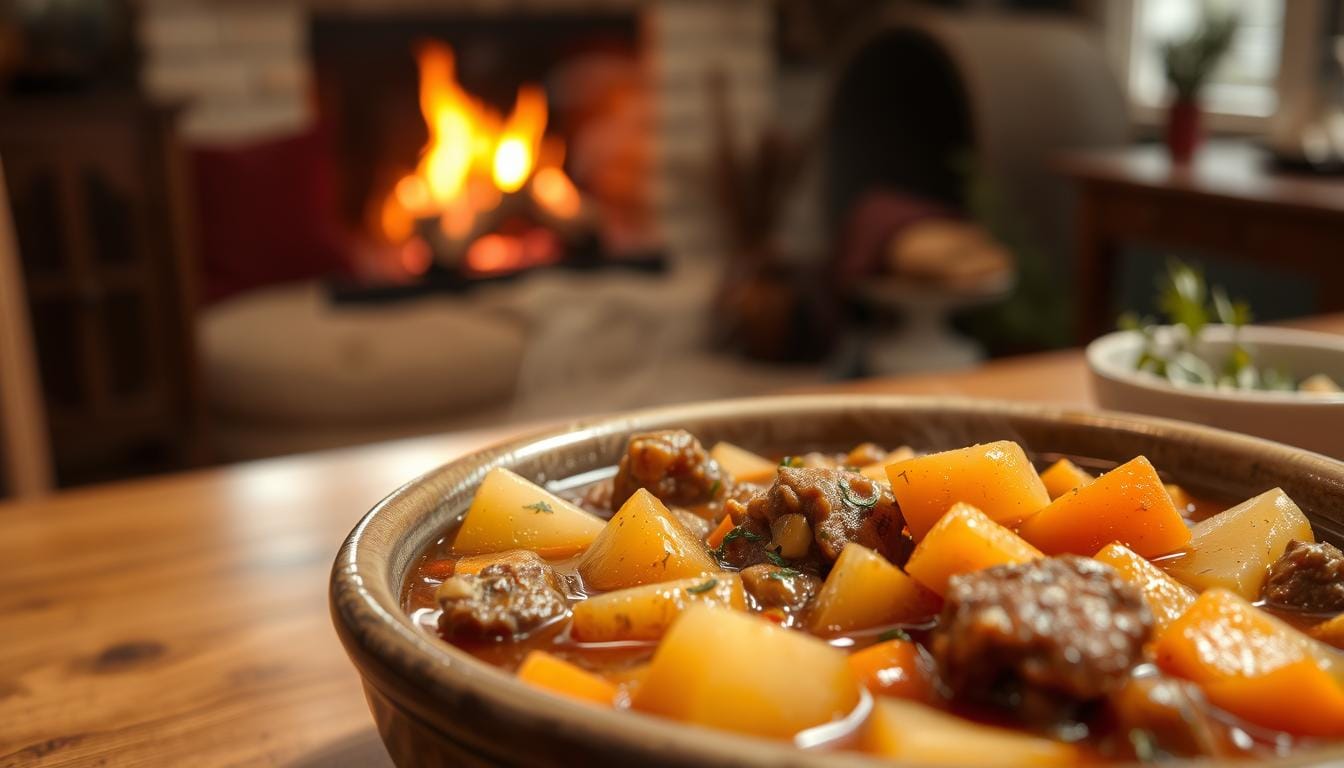
When it gets cold, there’s nothing better than coming home to a warm meal. The smell of tender beef and fresh veggies in your kitchen is amazing. A slow cooker meal is the best way to relax after a long day.
This comfort food classic has tender beef, tasty veggies, and a rich broth. It’s all cooked to perfection in a slow cooker. You get a Cozy Slow Cooker Beef Stew, warm, satisfying meal without spending hours cooking.
Key Takeaways
- A hearty slow cooker meal is perfect for cold days.
- Tender beef and fresh vegetables make for a delicious combination.
- This comfort food classic is easy to prepare and requires minimal supervision.
- You can customize the recipe to suit your taste preferences.
- A slow cooker is a convenient and time-saving cooking solution.
What Makes Beef Stew So Comforting?
A warm, savory bowl of beef stew is the ultimate comfort food. It brings a sense of warmth and satisfaction. This dish has been a favorite for many, offering a one-pot meal that’s both nourishing and delicious.
The Role of Warmth in Comfort Food
The warmth of beef stew is a big reason it’s so comforting. On a cold day, there’s nothing better than coming home to a simmering pot of stew. The aroma fills the house, and the first spoonful warms you from the inside out.
“Food is, for many of us, more than just sustenance; it’s a way to connect with our past, with our culture, and with each other.”
Flavor Profiles That Please the Palate
The rich flavors of beef stew are another key element. The tender beef, combined with various vegetables and a savory broth, creates a depth of flavor that’s hard to resist.
| Ingredient | Contribution to Flavor |
|---|---|
| Beef | Rich, meaty flavor |
| Vegetables | Variety of textures and flavors |
| Broth | Savory, slightly thickened sauce |
Essential Ingredients for Beef Stew
Creating a hearty beef stew starts with the ingredients. A winter recipe like beef stew is all about comfort and warmth. The right ingredients are key to getting that perfect flavor balance.
The beef is the main star of any beef stew. For a tender beef stew, choose the right cut. Lean beef chuck is great because it gets tender with slow cooking and adds flavor.
Choosing the Right Cut of Beef
Choosing the right beef cut is crucial for a tender and flavorful stew. Look for “stew meat” or “chuck roast.” These cuts are tougher and more flavorful, perfect for slow cooking. Avoid very lean cuts, as they can dry out during cooking.
Vegetables That Enhance Flavor
No beef stew is complete without a variety of vegetables. Potatoes, carrots, and onions are staples because they add sweetness and texture. You can also add celery or parsnips to enhance the flavor.
The Importance of Broth and Seasoning
The broth is what holds your stew together, providing moisture and flavor. Use beef broth or stock as the base and add your favorite seasonings. Herbs like thyme and rosemary are classic, but feel free to experiment.
By focusing on these essential ingredients, you’ll make a beef stew that’s both comforting and delicious. Whether for a crowd or a cozy night in, the right ingredients make all the difference.
Preparing Your Slow Cooker for Success
Getting your slow cooker ready is the first step to a delicious beef stew. It’s not just about throwing everything in. You need to prep your ingredients and set the right temperature and time.
Prepping Your Ingredients
Start by prepping your ingredients. Cut the beef into small pieces, chop the veggies, and measure your seasonings. Proper preparation ensures your stew cooks evenly and tastes great.
Here are some key steps for prepping your ingredients:
- Trim the beef of excess fat and cut it into uniform pieces.
- Chop your vegetables, such as carrots and potatoes, into bite-sized chunks.
- Measure out your broth, seasonings, and any other ingredients according to your recipe.
Setting the Right Temperature and Time
After prepping, set your slow cooker. Most have low and high settings. The low setting is best for longer cooking, 8-10 hours, while high is for 4-6 hours.
For beef stew, low is usually better. It makes tough beef tender. But, if you’re in a hurry, high works too. Here’s a quick guide:
| Cooking Method | Temperature | Cooking Time |
|---|---|---|
| Low | Low heat | 8-10 hours |
| High | High heat | 4-6 hours |
Remember, patience and the right slow cooker settings are key to a perfect easy dinner.
Tips for Perfecting Your Beef Stew
To make the perfect beef stew, pay close attention to detail and technique. Focus on the right cooking methods and choosing the best ingredients. This will help you create a dish full of savory flavors.
The Right Cooking Techniques
Cook your beef stew on low heat for a long time. This lets the flavors mix well and the beef get tender. Slow cooking is key for a stew with deep, savory flavors.
Browning the beef before slow cooking is also important. It makes the stew taste better and feel more tender. For tips on picking the right beef, check out our guide on stewing beef steak.
| Cooking Technique | Benefit |
|---|---|
| Browning the Beef | Enhances flavor and texture |
| Slow Cooking | Develops deep, savory flavors |
| Low Heat | Tenderizes the beef |
Enhancing with Herbs and Spices
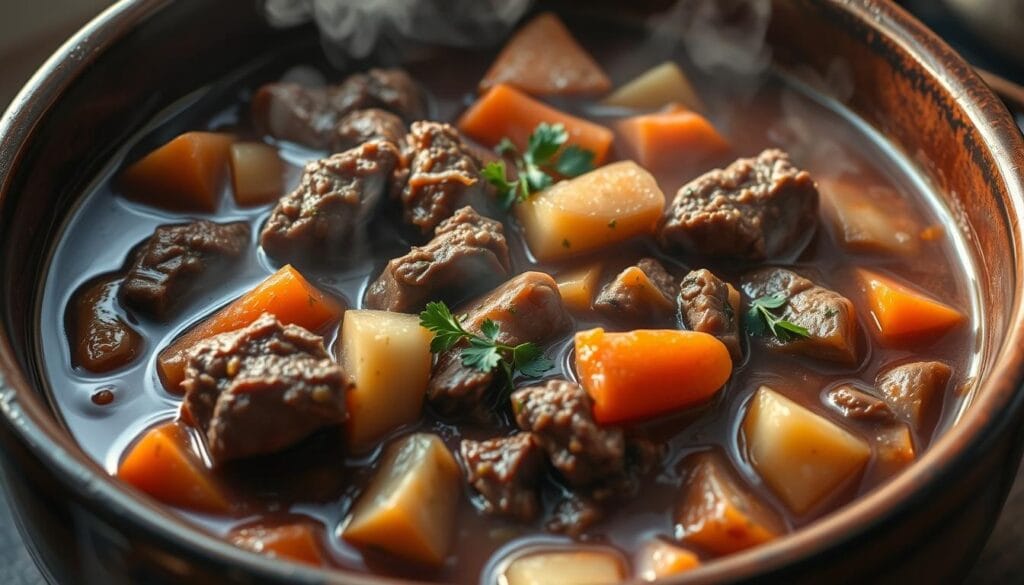
Herbs and spices are vital for adding savory flavors to your beef stew. Try adding thyme, rosemary, or bay leaves for a unique taste. Don’t be afraid to mix different spices to find your favorite combination.
Avoiding Common Mistakes
One common mistake is not cooking the stew long enough. This can make the beef tough and the flavors weak. Also, not seasoning the stew enough is another error. Regularly taste and adjust the seasoning to get a rich, balanced flavor.
Customizing Your Beef Stew Recipe
Your slow cooker beef stew is a canvas waiting for your personal touch. You can add flavor, texture, or nutrition in many ways. It’s a comfort food classic that you can make your own.
Adding Unique Ingredients
One way to make your stew special is by adding new ingredients. Try adding diced mushrooms for an earthy taste or potatoes for more heartiness. For color and nutrients, add kale or spinach towards the end.
Exploring beyond traditional ingredients is also fun. You can add a can of diced tomatoes for sweetness or red pepper flakes for spice. For more protein, see our guide on high-protein slow cooker recipes.
| Ingredient | Benefit |
|---|---|
| Mushrooms | Earthy flavor, texture |
| Potatoes | Extra heartiness, filling |
| Kale/Spinach | Added nutrients, color |
Vegetarian and Vegan Alternatives
Not everyone eats beef, so making vegetarian or vegan stews is great. For a vegetarian stew, use portobello mushrooms or eggplant. For vegan, try tempeh or seitan.
“The versatility of stew is one of its greatest charms. It’s a dish that can be adapted to suit any dietary preference or ingredient availability.”
When making these alternatives, adjust your seasonings. Different ingredients absorb or complement flavors differently. The key is to experiment and find what works best for you.
Serving Suggestions for Beef Stew
Beef stew is a great choice for a cozy meal. You can make it even better by adding the right sides or presenting it in new ways.
Best Accompaniments
Pair your beef stew with crusty bread or mashed potatoes. These choices soak up the broth, making it a hearty dinner. Adding steamed veggies or a green salad makes the meal complete.
For a rustic touch, serve stew with warm bread or dinner rolls. This combo will fill you up and make you feel good.
Creative Ways to Serve Stew
Be creative with your beef stew. Try it in bread bowls for a fun twist. Or, serve it over egg noodles or rice for a new take on comfort food.
For a special look, garnish with fresh herbs like parsley or thyme. This adds color and freshness, making the dish more appealing.
Trying different sides and presentation styles can make your beef stew a memorable meal. It’s sure to impress.
Storing Leftover Beef Stew
After enjoying your slow cooker beef stew, it’s key to store leftovers right. This way, you can relish your one-pot meal again, keeping its taste and safety intact.
Proper Storage Techniques
First, cool the stew to room temperature within two hours. This step stops bacteria from growing. Then, put it in airtight containers, like glass or plastic, making sure they’re sealed well.
For fridge storage, keep it there for three to four days. If longer, freeze it. Remember to label the containers with the date and what’s inside. Freezing keeps the stew good for months.
Reheating Tips for Best Flavor
Reheating your stew right is as crucial as storing it. If frozen, thaw it in the fridge or cold water.
To reheat, use a saucepan on low heat, stirring now and then. Or, microwave it, covering the container and heating in short bursts. Adding water or broth helps if it’s too thick.
By following these steps, you can enjoy your one-pot meal once more. You’ll relish the flavors and tender beef that made it so comforting.
Nutritional Benefits of Beef Stew
Beef stew is a meal that’s both tasty and nutritious. It’s packed with essential nutrients that are good for you. This dish is a favorite for many because of its health benefits.
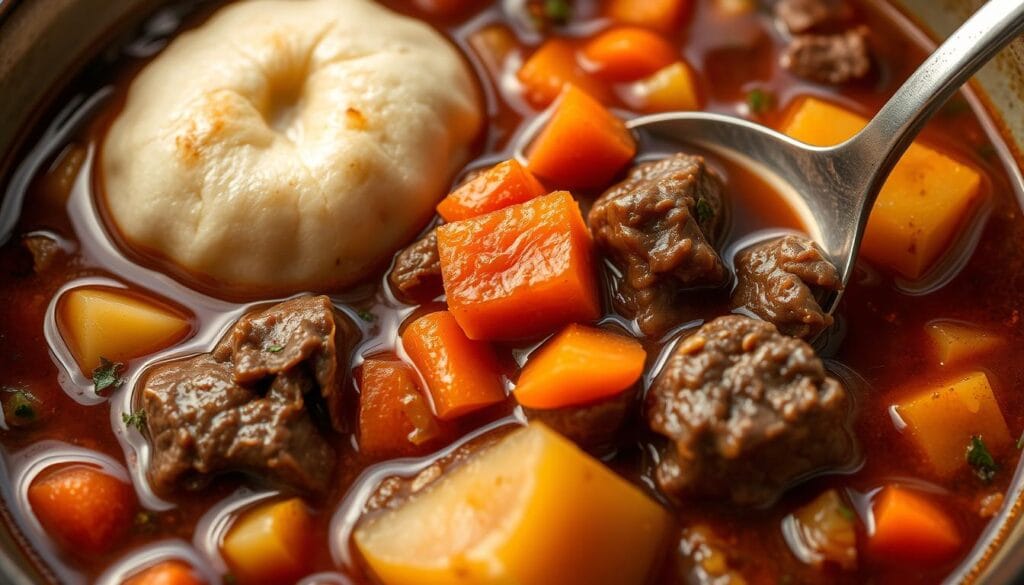
Beef stew is a great source of protein. Protein is important for building and repairing muscles. The slow cooking makes the beef tender and easy to digest, perfect for boosting your protein intake.
Protein and Nutrients Provided
The tender beef in stew is full of protein, vitamins, and minerals like iron and zinc. Iron helps make healthy red blood cells. Zinc is good for your immune system and helps wounds heal. Adding various vegetables to your stew can make it even healthier, as shown in our old-fashioned vegetable beef soup recipe.
Beef stew also has other nutrients. Carrots and potatoes, common in stews, add fiber, vitamins, and minerals. Carrots are rich in vitamin A, which is good for your eyes. Potatoes are a great source of potassium, which helps control blood pressure.
Comfort Food That’s Good for You
Beef stew is a comfort food that’s also nutritious. It combines tender beef and vegetables in a flavorful broth. This makes for a meal that’s both satisfying and healthy. By choosing lean beef and adding lots of vegetables, you can enjoy a hearty, nutritious meal.
To make your stew even healthier, use low-sodium broth and season with herbs and spices instead of salt. This reduces sodium and adds flavor. You can also try different vegetables to change up the nutrients in your stew.
In summary, beef stew is a nutritious and comforting meal. It’s a great way to get protein, vitamins, and minerals. Adding it to your diet can be a healthy choice.
Slow Cooker Versus Traditional Methods
Choosing between a slow cooker and traditional methods for beef stew depends on your preference. It also depends on how much time you have and the flavor you want. Both ways have their benefits.
Cooking Time Comparisons
Cooking time is a big factor in choosing between slow cookers and traditional methods. Slow cookers cook your stew for a long time at a low heat. This is great for busy days when you want a meal ready when you get home. Traditional methods need more attention and cook faster.
- Slow Cooker: 8-10 hours on low or 4-6 hours on high
- Traditional Method: 1.5 to 3 hours on the stovetop or in the oven
Flavor Differences and Preferences
The flavor of your beef stew can change based on the cooking method. Slow cookers blend flavors over time, making the taste rich and deep. Traditional methods cook the broth faster, giving a different taste.
Beef stew is a great choice for an easy dinner or a cozy winter recipe. You can enjoy a tasty meal whether you use a slow cooker or traditional cooking.
Popular Variations of Beef Stew
Beef stew is loved worldwide, from Ireland to Louisiana. It’s a dish with savory flavors that many cultures enjoy. Each culture adds its own special touch.
International Twists on Classic Stew
Beef stew has many international versions. For example, an Irish Beef Stew uses tender beef, potatoes, and carrots in a rich broth. Korean beef stew adds gochujang for spice, while Italian stew includes tomatoes and herbs.
Other international twists include:
- Moroccan beef stew with couscous and preserved lemons
- Greek beef stew with orzo and feta cheese
- Mexican beef stew with chipotle peppers and cumin
Southern and Cajun Influences
In the South, beef stew is a comfort food. It often has okra, tomatoes, and spices. Cajun stew, on the other hand, is bold with onions, bell peppers, and spices.
| Region | Key Ingredients | Flavor Profile |
|---|---|---|
| Southern | Okra, tomatoes, beef | Comforting, slightly spicy |
| Cajun | Onions, bell peppers, celery, beef | Bold, spicy, aromatic |
| Irish | Potatoes, carrots, beef | Hearty, comforting |
Beef stew’s many variations offer a rich culinary journey. Each version brings its own savory flavors. Whether you’re trying international or regional flavors, there’s a stew for everyone.
Customer Reviews and Testimonials on Beef Stew
Beef stew is more than just a meal; it’s a comfort. Many have found joy in this dish, sharing their experiences. Their stories show how much they love it.
What People Love About This Recipe
People love the tender beef and rich flavors in this stew. It’s easy to make, which is a big plus. It’s perfect for a cozy night or a big gathering.
Real-life Stories of Comfort Through Food
For many, beef stew is a warm reminder of home and family. Its aroma and taste bring warmth and togetherness. Enjoying this stew connects you to a community that values comfort and joy.