
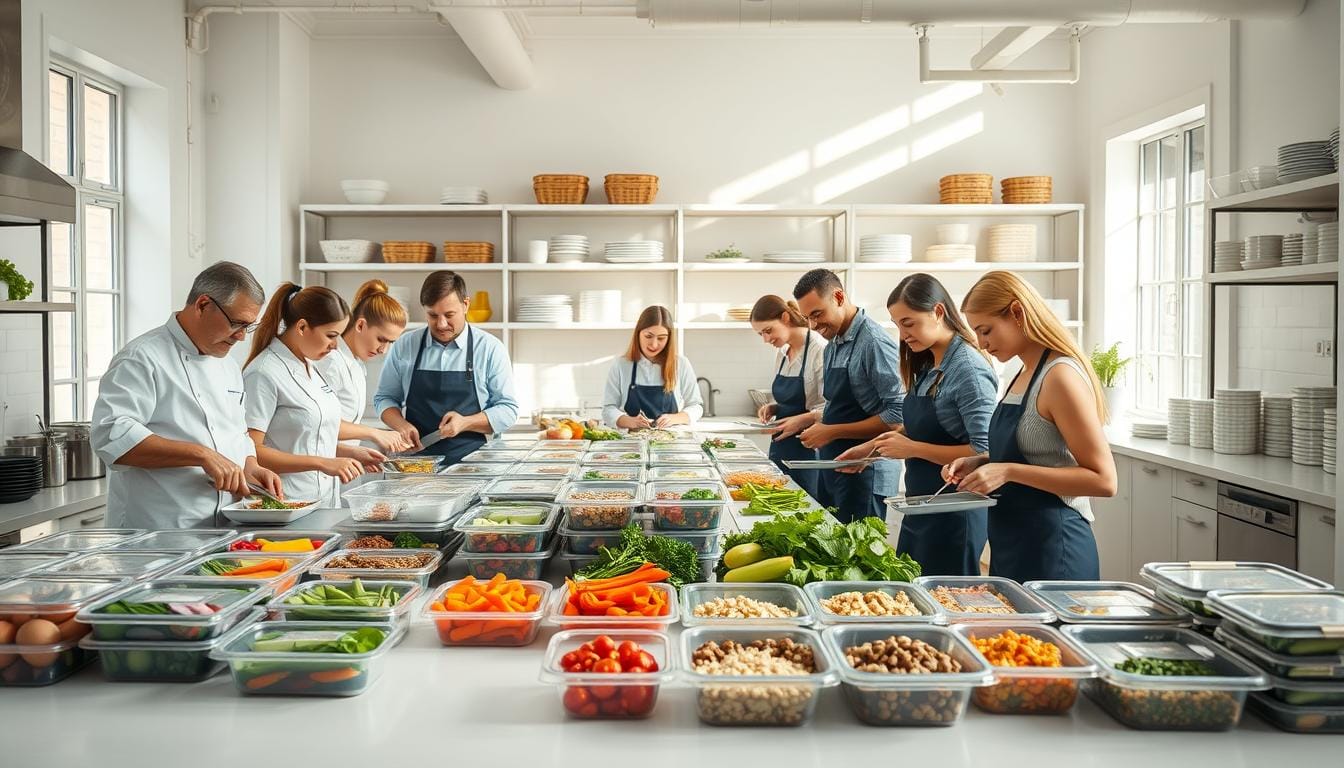
Richard Branson, a famous entrepreneur, once said, “The key to success is to start before you’re ready.” This advice is very true for starting a meal preparation venture. The market is growing fast, with a forecast of reaching $28 billion by 2028.
This guide will help you through the key steps to start and grow a successful business. You’ll learn about market trends, business planning, and marketing strategies. These will help you launch your venture.
Table of Contents
Understanding the Meal Prep Market
The meal prep market is changing fast. It’s all about healthy and easy-to-make food. Knowing how it works is key to your success.
Current Trends in Meal Prep
Today, the meal prep world is all about healthy and nutritious meals. People want food that’s easy to grab and fits their diet and health goals.
- Plant-based and vegan meals are becoming more popular.
- Meals for special diets like gluten-free and keto are in demand.
- Customers want more variety in their meals, leading to diverse menus.
To learn more about catering to these trends, check out our about page.
Target Customer Demographics
Knowing who your customers are is crucial. The main groups for meal prep services are:
- Fitness lovers who need special nutrition plans.
- Busy professionals looking for easy meals.
- People who care about their health and want balanced diets.
By knowing these groups, you can create marketing and menus that speak to them.
Competitive Analysis
Doing a competitive analysis is key to seeing where you stand in the meal prep market. It means finding your rivals, looking at their good and bad points, and figuring out how you’re different.
Important things to look at in a competitive analysis include:
- What meals they offer and how much they cost.
- How they market and brand themselves.
- How they treat and connect with their customers.
Understanding the competition helps you place your meal prep business well and find market gaps.
Defining Your Niche
A well-defined niche is key to a successful meal prep business. By focusing on a specific area, you can tailor your services to meet the unique needs of your target audience. This sets you apart from competitors.
Vegetarian and Vegan Options
Catering to vegetarian and vegan diets is a popular choice in meal prep. These diets are rich in plant-based foods, offering a variety of flavors and nutritional benefits. You can create meal plans that are not only delicious but also packed with nutrients.
- Focus on seasonal produce to ensure freshness and variety.
- Incorporate a range of protein sources like beans, lentils, and tofu.
- Use herbs and spices to add flavor without extra salt or sugar.
Gluten-Free Meal Prep
For those with gluten intolerance or sensitivity, gluten-free meal prep is a vital service. You can offer a variety of gluten-free grains and carefully select ingredients to avoid cross-contamination.
Some key considerations include:
- Using gluten-free oats and other grains.
- Preparing meals in a dedicated gluten-free environment.
- Clearly labeling your products to build trust with your customers.
Healthy Snacks and Meal Plans
Creating healthy snacks and meal plans is another effective niche. Busy lifestyles demand convenient, nutritious food that can be easily integrated into daily routines.
Consider the following when developing your meal plans:
- Balance macronutrients to keep customers satisfied.
- Incorporate a variety of colors on the plate to ensure a range of vitamins and minerals.
- Offer flexible plans that can be adjusted based on customer feedback.
By defining your niche and focusing on specific dietary needs or preferences, you can establish a loyal customer base. This differentiates your business in a crowded market.
Creating a Business Plan
Creating a detailed business plan is key to your meal prep business’s success. It acts as a guide, helping you make decisions and stay focused on your goals.
Outline Your Goals and Vision
Start by outlining your goals and vision. Define what you aim to achieve, both short-term and long-term. Think about what makes your business unique and what sets it apart from others.
Key elements to include in your business goals:
- Mission statement
- Target market analysis
- Competitive analysis
- Business structure (sole proprietorship, LLC, etc.)
Financial Projections and Budgeting
Financial projections are vital in your business plan. You must estimate your income, expenses, and profits over time. This helps you see if your business will be financially successful and guides your decisions.
Consider the following when making financial projections:
- Initial start-up costs
- Ongoing expenses (ingredients, labor, marketing)
- Projected revenue streams
- Break-even analysis
| Expense Category | Monthly Cost | Annual Cost |
|---|---|---|
| Ingredients and Supplies | $5,000 | $60,000 |
| Marketing and Advertising | $1,500 | $18,000 |
| Rent and Utilities | $2,000 | $24,000 |
| Labor Costs | $3,000 | $36,000 |
Marketing Strategy Overview
Your marketing strategy should explain how you’ll attract and keep customers. Identify your target audience, pick the best marketing channels, and create a brand that speaks to your customers.
Effective marketing strategies for meal prep businesses:
- Social media marketing
- Email marketing campaigns
- Influencer partnerships
- Local SEO optimization
Legal Requirements and Permits
Starting a meal prep business means following the law and getting the right permits. It’s important to know the rules for food businesses in the U.S.
Food Business Licenses in the U.S.
You’ll need to get the right licenses to run a meal prep business. These licenses differ by state and area. You’ll likely need a business license, a food service permit, and maybe more.
| License/Permit | Description | Typical Issuing Authority |
|---|---|---|
| Business License | Basic license to operate a business | City or County Clerk’s Office |
| Food Service Establishment Permit | Permit to operate a food service business | Local Health Department |
| Food Handler’s Permit | Certification for individuals handling food | Local Health Department |
Health Department Regulations
Health rules are key to keeping your food safe and good. They cover how you handle, store, prepare, and throw away food.
Key areas of focus include:
- Maintaining proper food temperatures
- Preventing cross-contamination
- Ensuring cleanliness and sanitation of equipment and facilities
Insurance Considerations
Insurance is crucial for protecting your meal prep business. It helps cover losses from unexpected events.
Types of insurance to consider:
- General Liability Insurance
- Product Liability Insurance
- Workers’ Compensation Insurance (if you have employees)
- Business Interruption Insurance
By following these legal steps and getting the right permits, your meal prep business can run well and legally.
Sourcing Ingredients and Suppliers
The success of a meal prep business starts with fresh, high-quality ingredients. It’s key to build strong relationships with suppliers for consistency and quality.
Finding Quality Vendors
To find good vendors, look for local farmers, distributors, and wholesalers. They should offer fresh produce, meats, and more at good prices. Food events and local business groups are great for meeting suppliers.
When choosing vendors, consider these:
- Reliability and consistent deliveries
- Quality of products
- Pricing and payment terms
- Certifications and health regulations
Seasonal Produce and Costs
Using seasonal produce cuts costs and ensures freshness. It’s cheaper and more available, making your menu appealing and affordable.
| Season | Popular Produce | Cost Savings |
|---|---|---|
| Spring | Asparagus, strawberries, spinach | Up to 15% savings |
| Summer | Tomatoes, zucchini, corn | Up to 20% savings |
| Fall | Pumpkins, apples, squash | Up to 10% savings |
Setting Up Reliable Deliveries
After finding suppliers, a reliable delivery system is vital. Negotiate schedules that fit your needs for fresh, on-time ingredients.
For reliable deliveries, try these:
- Keep clear communication with suppliers
- Use a tracking system for deliveries
- Regularly check the quality of ingredients
Designing Your Menu
The menu is key for your meal prep business. It draws in customers and keeps you competitive. A good menu is both attractive and efficient.
Balancing Variety and Cost
It’s important to balance variety with cost. Too many choices can raise costs and complexity. But too few might scare off customers. Use seasonal produce to keep costs down and menus fresh.
Here’s a table to help balance variety and cost:
| Menu Item | Seasonal Ingredient | Cost |
|---|---|---|
| Grilled Chicken Salad | Fresh Lettuce, Tomatoes | $6.50 |
| Quinoa Bowl | Roasted Vegetables | $7.00 |
| Vegan Wrap | Avocado, Bell Peppers | $6.00 |
Nutritional Considerations
Customers look for meals that are healthy. Make sure your menu has high-protein, low-carb, and vegan options. Check out high-protein slow cooker recipes for ideas.
Think about the health benefits of each dish. For example, high-protein meals help build and repair muscles. They’re great for those who work out.
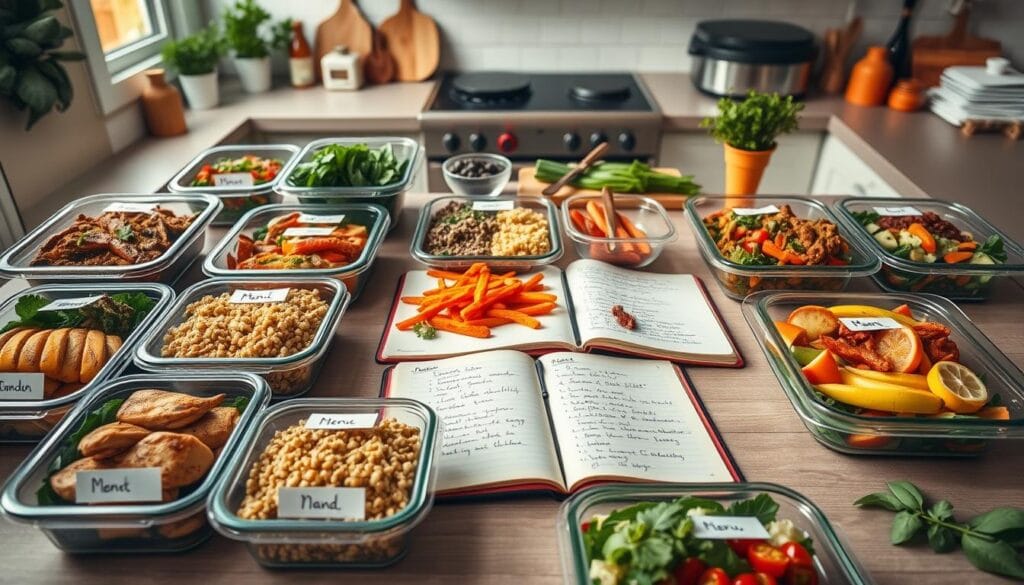
Sample Menu Ideas
Here are some menu ideas for your meal prep business:
- Breakfast bowls with varied toppings
- Salads with protein like chicken, tofu, or fish
- Whole grain wraps with lean fillings
- Vegetable-based soups and stews
By using these ideas and focusing on nutrition, you can make a menu that’s both tasty and healthy.
Pricing Your Meal Prep Services
Setting the right prices is key to a successful meal prep business. Your prices should be competitive and reflect the value you provide. A good pricing strategy helps attract and keep customers.
Understanding Cost-Plus Pricing
Cost-plus pricing calculates the cost of making a meal and adds a markup. This ensures you make a profit while covering your costs.
To use cost-plus pricing, first figure out your costs. This includes ingredients, labor, packaging, and overheads. For example, if a meal costs $5 and you want a 30% profit, your price would be $6.50.
“The price of success is hard work, dedication to the job at hand, and the determination that whether we win or lose, we have applied the best of ourselves to the task at hand.” – Vince Lombardi
Price Comparison with Competitors
It’s important to compare your prices with those of competitors. Look at local meal prep businesses to see how they price their meals. This helps you find where you can offer better value.
| Competitor | Price per Meal | Subscription Discount |
|---|---|---|
| Meal Prep Co. | $8 | 10% off for 5+ meals |
| Healthy Bites | $9 | 15% off for 10+ meals |
| Fit Meals | $7.50 | 5% off for 5+ meals |
Offering Subscription Models
Subscription models can bring in steady income and keep customers coming back. Consider discounts for bulk orders or recurring subscriptions.
For instance, offer a 10% discount for a weekly meal plan. This encourages repeat business and helps predict your income.
By understanding cost-plus pricing, comparing prices, and offering subscriptions, you can create a pricing strategy. This will help your business grow and keep customers happy.
Branding Your Meal Prep Business
To succeed in the meal prep business, you need a compelling brand that speaks to your audience. Strong branding sets you apart and draws in customers.
Crafting Your Brand Identity
Creating your brand identity means making a unique image that shows your values and mission. You’ll need a logo, color scheme, and typography that stays the same everywhere.
Key elements of brand identity are a memorable logo, a consistent color palette, and typography that shows your brand’s personality.
- Logo: A simple, yet distinctive logo that represents your brand.
- Color Scheme: A palette of 3-4 colors that evoke the desired emotions and are consistent across all marketing materials.
- Typography: Font styles that are legible and align with your brand’s tone.
Designing Effective Packaging
Effective packaging is key for meal prep businesses. It protects your products and markets them. Your packaging should look good, match your brand, and follow food safety rules.
| Packaging Element | Description | Importance |
|---|---|---|
| Material | Eco-friendly, durable, and safe for food | High |
| Design | Visually appealing, consistent with brand identity | High |
| Labeling | Clear instructions, nutritional information, and branding | High |
Developing a User-Friendly Website
A user-friendly website is crucial for any meal prep business. It’s where customers find information, order, and engage. Your site should be easy to use, work well on mobile, and be secure.
Key features of a user-friendly website include clear menu options, a simple ordering process, and responsive design that adapts to different devices.
- Clear Menu Options: Easy access to menu, pricing, and nutritional information.
- Simple Ordering Process: Streamlined checkout process that is secure and easy to use.
- Responsive Design: Website that adapts to different screen sizes and devices.
Setting Up a Production Process
To deliver high-quality meals consistently, setting up a streamlined production process is essential. A well-organized production process not only enhances efficiency but also ensures that your meal prep business can scale effectively to meet growing customer demands.
Kitchen Space Considerations
When setting up your production process, one of the first considerations is your kitchen space. Adequate kitchen space is crucial for organizing your operations efficiently. You need to ensure that your kitchen is compliant with health and safety regulations, has enough room for food preparation, cooking, and storage, and is designed to minimize cross-contamination risks.
Consider the layout of your kitchen carefully. Optimizing your workflow by arranging equipment and workstations in a logical sequence can significantly reduce preparation time and improve productivity. For instance, having separate areas for different stages of food preparation, such as chopping, cooking, and packaging, can help streamline your operations.
Equipment You’ll Need
Investing in the right equipment is vital for a smooth production process. Essential equipment for a meal prep business may include commercial-grade cooking appliances, food storage containers, and packaging machinery. High-quality equipment not only improves efficiency but also helps in maintaining the quality of your meals.
Some of the key equipment to consider includes:
- Commercial ovens and stoves
- Refrigeration units for storing ingredients and prepared meals
- Food processors and chopping tools
- Packaging machines for sealing and labeling
As your business grows, you may need to expand your equipment inventory. It’s essential to research and invest in equipment that meets your specific needs and complies with health and safety standards.
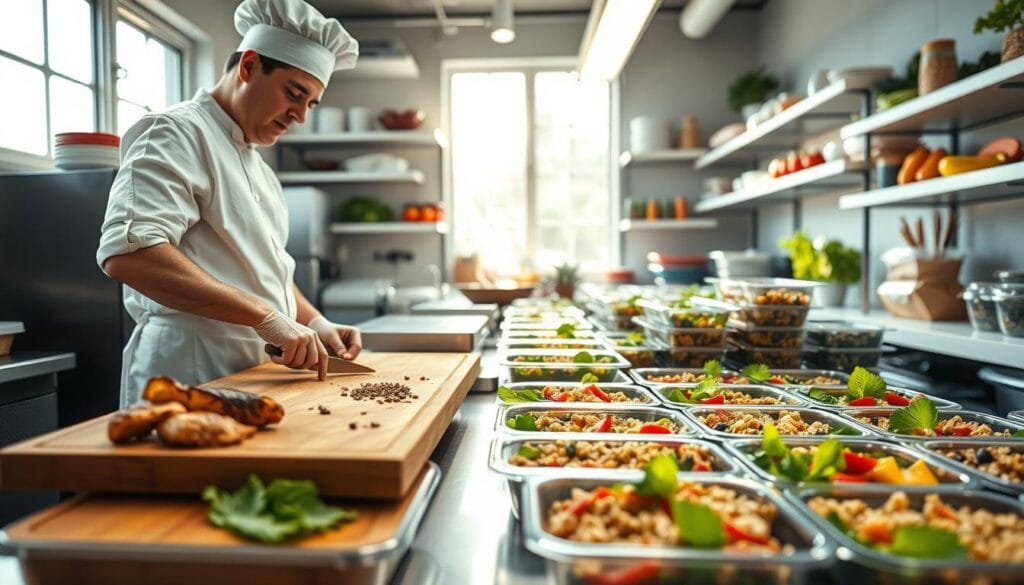
Workflow Optimization Tips
Optimizing your workflow is critical to ensuring that your production process is efficient and scalable. One effective strategy is to implement a batch cooking system, where you prepare large quantities of a particular dish at once. This approach can help reduce waste, save time, and ensure consistency across your meals.
Another tip is to standardize your recipes and preparation procedures. By having clear, documented processes, you can train your staff more effectively and maintain high-quality standards. Regularly reviewing and refining your workflow can also help identify bottlenecks and areas for improvement.
“Efficiency is doing better what is already being done.” – Peter Drucker
By focusing on kitchen space considerations, investing in the right equipment, and optimizing your workflow, you can establish a robust production process that supports the growth and success of your meal prep business.
Marketing Your Meal Prep Business
Your meal prep business needs a strong marketing plan to find new customers. Good marketing helps attract and keep customers in a crowded market.
Social Media Strategies
Social media is a great tool for marketing your meal prep business. Share recipes and customer stories to draw in followers. Use Instagram and Facebook to show off your meals and talk to your audience. For more tips, see this guide on meal prep marketing ideas.
Post often and use hashtags to get seen more. Talk back to your followers by answering comments and messages fast.
Building an Email List
Having an email list lets you talk directly to your customers and share your services. Give discounts or free meals to get people to sign up for your newsletter. Then, send special offers to keep your customers interested in what you’re offering.
Keep your email list fresh and relevant. Sort your list to send messages that fit each group of customers.
Collaborating with Influencers
Working with influencers can really help your meal prep business get noticed. Find influencers who share your values and have the right audience for you. Partner with them to promote your meals through sponsored posts or reviews.
Choose influencers based on their engagement and content quality. Make sure their values and audience match yours for the best results.
Managing Operations and Staff
To deliver top-notch meals and outstanding customer service, managing your operations and staff is key. As your meal prep business expands, setting up efficient systems is vital. These systems should boost productivity and keep customers happy.
Hiring and Training Employees
Finding the right employees is crucial for your meal prep business’s success. Look for people who are skilled and share your business’s values. They should also be dedicated to providing excellent customer service.
Training your team is just as important. Create a detailed training program. It should cover food preparation, customer service, and how your business operates.
Scheduling and Workflow Management
Good scheduling and workflow management are essential for your meal prep business’s smooth operation. Use scheduling tools to plan staff shifts well. This ensures you have enough people during busy times.
Make your workflow more efficient by cutting out unnecessary tasks. This will reduce waste, boost productivity, and make customers happier.
Customer Service Best Practices
Customer service is a top priority in the meal prep business. Make sure your staff knows how to handle customer questions and complaints well and quickly.
Using customer service best practices, like responding to feedback and solving problems fast, will help you keep customers coming back. This is key to your business’s success.
| Customer Service Metric | Target | Actual Performance |
|---|---|---|
| Response Time to Customer Inquiries | < 2 hours | 1.5 hours |
| Customer Satisfaction Rating | 90% | 92% |
| Resolution Rate for Customer Complaints | 95% | 96% |
By focusing on effective operations and staff management, you can serve high-quality meals and provide exceptional customer service. This will drive your meal prep business’s success.
Scaling Your Meal Prep Business
As your meal prep business grows, it’s key to scale your operations. This means meeting more customer demands and staying ahead in the market. Good scaling strategies help you grow your customer base, boost revenue, and keep services top-notch.
New Menu Ideas
Adding new menu items is a big part of scaling. You can bring in new recipes, seasonal dishes, or options for special diets. This will draw in new customers and keep the ones you have, helping your business grow.
Logistics and Delivery
Looking into delivery options is also crucial. You might team up with delivery services or build your own network. This way, you can reach more people and offer them flexible, convenient choices.
Strategic Partnerships
Working with local gyms and health clubs is another smart move. These partnerships can lead to joint marketing efforts and promotions. By teaming up with businesses that match your target audience, you can grow your business and reach more customers.