
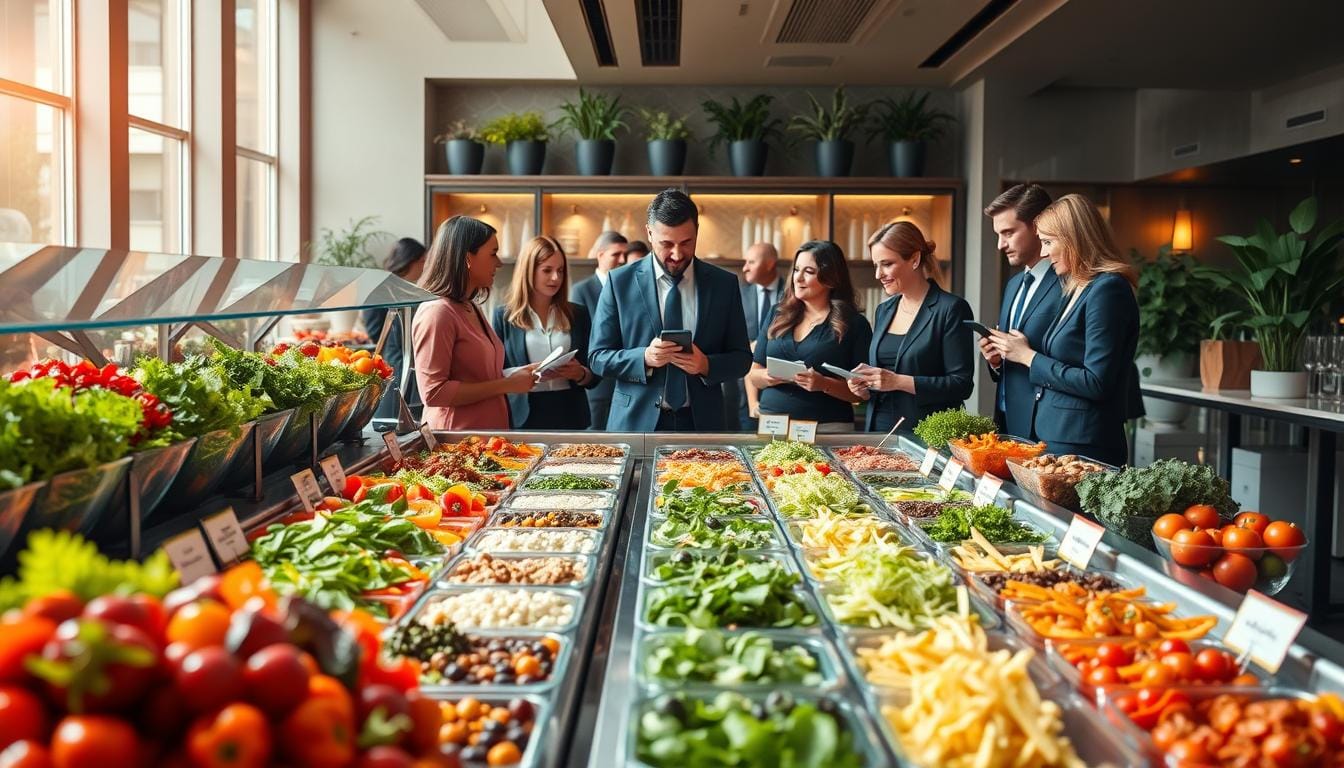
As Andrew Carnegie once said, “The first rule of success is to develop into a person with qualities that the world needs.” Starting a salad-centric business can be very profitable. It meets the growing demand for fresh, customizable meals.
Starting this journey is exciting, tapping into the trend of healthy eating. Opening a Fresh Salad place in the USA can cost between $150,000 to $450,000. So, careful planning is key.
This guide will help you launch your business successfully. We’ll cover market research and setting up your shop.
Table of Contents
Understanding the Salad Bar Restaurant Concept
To start a salad bar, you need to know the basics. A salad bar offers fresh, healthy meals for all tastes and diets.
What Is a Salad Bar Restaurant?
A salad bar focuses on salads made from fresh ingredients. Customers can make their own meals. It’s all about health, freshness, and customization. Salad bars are casual and flexible, unlike traditional restaurants.
Target Audience for Your Salad Bar
Finding out who your customers are is key. You must know what they like and how they live. Are they busy professionals or families looking for healthy meals?
Maybe your customers are health fans or students on a budget. To get to know them, check out local demand and visit farmers’ markets or wellness events. These places can give you insights into what your customers want.
Knowing your audience helps you create the perfect salad bar menu ideas. This way, you can make their dining experience better and keep them coming back.
Initial Costs of Starting Your Salad Bar
Starting a salad bar business means knowing the costs upfront. You’ll need to think about equipment, location, and rental fees. These are key expenses to consider.
Equipment Needed and Estimated Costs
The cost for kitchen and serving gear for a salad bar is between $50,000 and $120,000. This includes:
- Commercial salad preparation equipment, such as refrigerated salad bars and prep tables.
- High-quality cooking equipment, including ovens, stoves, and microwaves.
- Point-of-Sale (POS) systems and other technology for efficient service.
- Dining area furniture and decor to create an inviting atmosphere.
Key Equipment Costs:
| Equipment | Estimated Cost |
|---|---|
| Refrigerated Salad Bars | $8,000 – $12,000 |
| Commercial Ovens and Stoves | $5,000 – $8,000 |
| POS Systems | $2,000 – $3,500 |
Location Considerations and Rental Expenses
The location of your salad bar is crucial. A prime urban spot can cost up to 40% more than a suburban area. Think about foot traffic, accessibility, and competition when choosing a location.
Key Location Considerations:
- Foot traffic and visibility.
- Proximity to offices, gyms, and other health-conscious venues.
- Parking availability and accessibility.
To save on rental costs, look for a lease with renewal options and rent caps. Knowing these costs helps you plan better and prepare for the financial side of starting your salad bar.
By planning your equipment and location carefully, you can manage startup costs. This sets you up for success in the long run.
Designing Your Salad Bar Layout
The layout of your salad bar is more than looks; it’s about making a space that’s welcoming and efficient. A well-designed salad bar can make dining better, get customers involved, and boost sales.
Creating an Inviting Atmosphere
To make your salad bar inviting, think about the look you want. Mix colors, lighting, and decor that shows off your brand. For example, using wood or plants can warm up the space. Freshness is key, so show off your veggies and ingredients in a way that highlights their freshness.
Using shallow containers is smart for showing off your ingredients. Shallow containers make veggies look fresher and more plentiful. Deep containers can lead to stale food if not used. This method makes your ingredients look better and helps with food rotation, cutting down on waste.
Functional Layout for Efficiency
A good layout is key for your salad bar’s smooth operation. Think about how customers and staff will move through the space. Here are some important points:
- Put your most popular items where they’re easy to get to.
- Keep your salad bar organized with clear labels and signs.
- Consider a sample salad display to inspire and show off your menu.
By focusing on both looks and function, you can make a space that’s welcoming, efficient, and perfect for a great customer experience.
Crafting Your Unique Salad Bar Menu
A great salad bar menu shows off your restaurant’s style and meets many tastes. It’s key to draw and keep customers in a crowded market.
Ingredient Selection and Sourcing
Choosing top-notch ingredients is crucial for a hit salad bar. You should pick fresh greens, veggies, fruits, and proteins. Buying local helps keep things fresh and appeals to eco-conscious customers.
Initial Inventory Investment: Starting a Fresh Salad Bar costs between $7,000 and $15,000. This covers a wide range of ingredients for all tastes and diets.
| Ingredient Category | Examples | Estimated Cost |
|---|---|---|
| Greens and Vegetables | Lettuce, Spinach, Tomatoes, Cucumbers | $2,000 – $3,000 |
| Proteins | Grilled Chicken, Tuna, Tofu | $1,500 – $2,500 |
| Fruits and Nuts | Apples, Berries, Almonds, Walnuts | $1,000 – $2,000 |
| Dressings and Toppings | Olive Oil, Vinegar, Cheese, Croutons | $2,000 – $3,000 |
Building Healthy Options that Sell
To make a menu that sells, offer healthy choices for all diets. Include vegan, gluten-free, and low-carb options. Create special salads that are yours alone.
“The key to a successful salad bar is not just about offering healthy options, but also about creating a menu that is both appealing and Instagram-worthy.”
Offer a build-your-own salad option with many toppings and dressings. This lets customers pick what they like and be creative with their meals.
By using the best ingredients and creating a varied menu, you can make a standout salad bar. This will attract and keep a loyal customer base.
Implementing Fast and Efficient Service
To succeed in the salad bar industry, fast and efficient service is key. Customers want a quick, healthy meal. It’s your job to make that happen.
Staff Training for Customer Interaction
Training staff for great customer service is essential. They should greet warmly, answer menu questions, and handle orders well. Keeping the place clean and welcoming is also crucial. For more tips, check out salad bar startup ideas to improve the customer experience.
Key aspects of staff training include:
- Product knowledge to answer customer queries
- Effective communication skills
- Handling customer complaints professionally
Technology Solutions for Ordering
Using technology for ordering can make things smoother. A POS system and online ordering cut down wait times. They also boost customer happiness. Industry insights show that F&B software can increase sales and keep customers coming back.
Some benefits of technology solutions include:
| Benefit | Description |
|---|---|
| Reduced Wait Times | Online ordering and efficient POS systems minimize the time customers spend waiting for their orders. |
| Increased Accuracy | Automated systems reduce the chance of human error in ordering and billing. |
| Enhanced Customer Experience | Quick and efficient service leads to higher customer satisfaction and loyalty. |
By focusing on staff training and technology, you can offer fast, efficient service. This will make your salad bar stand out.
Marketing Your Salad Bar Restaurant
Marketing your salad bar restaurant well is crucial in a crowded market. You must use various strategies to draw in and keep customers. These strategies should showcase what makes your restaurant special and build a strong brand.
Utilizing Social Media for Promotion
Having a strong online presence is vital for attracting customers. Use social media to connect with people and show off your fresh food. Instagram and Facebook are great for sharing beautiful food photos, kitchen sneak peeks, and customer feedback.
Tips for Effective Social Media Marketing:
- Post high-quality content often to keep your audience interested.
- Use relevant hashtags to get more eyes on your posts.
- Chat with your followers by quickly responding to comments and messages.
- Try social media contests or deals to bring in new faces.
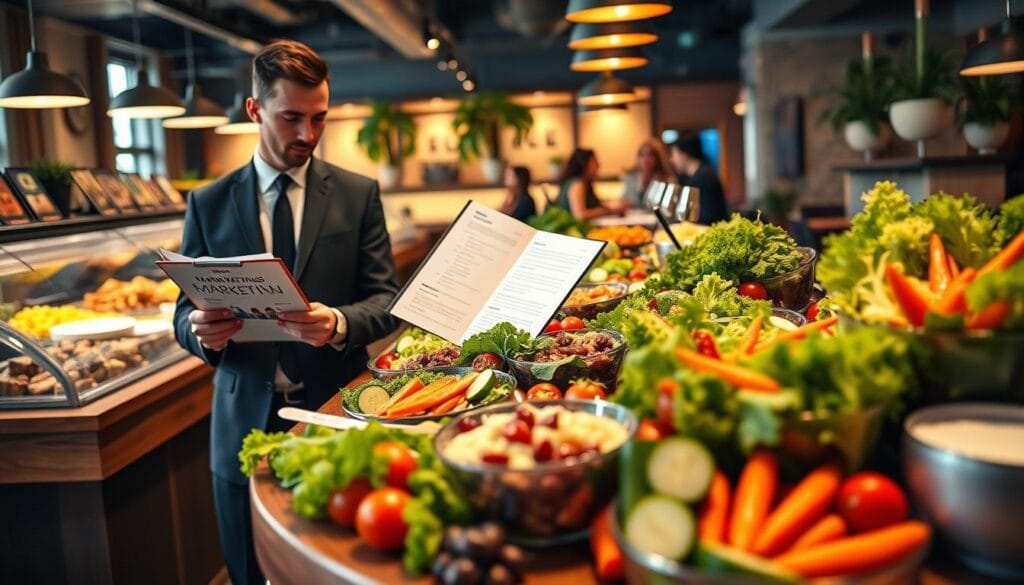
Creating Local Partnerships
Forming local partnerships can also boost your salad bar’s visibility. Work with nearby businesses, gyms, and wellness centers for joint deals or discounts. Joining local events and farmers’ markets can also raise your brand’s profile.
Benefits of Local Partnerships:
| Partnership Type | Benefits |
|---|---|
| Gyms and Wellness Centers | Offer joint discounts, promote healthy lifestyles |
| Local Businesses | Cater their events, offer corporate discounts |
| Farmers’ Markets | Source fresh ingredients, promote sustainability |
By using these marketing tactics, you can promote your salad bar restaurant well. This will help you attract a loyal customer base and succeed in the competitive food industry.
Managing Inventory and Food Costs
Running a profitable salad bar restaurant means managing inventory and food costs well. You must balance offering a wide menu with avoiding waste. This balance is key to keeping your profits up.
Understanding Food Cost Percentage
The food cost percentage shows how much you spend on ingredients compared to what you make from selling salads. Aim for a percentage between 25% to 35%. To hit this target, check your menu prices and ingredient costs often. For example, if you make $1,000 and spend $300 on ingredients, your percentage is 30%.
| Revenue | Food Cost | Food Cost Percentage |
|---|---|---|
| $1,000 | $250 | 25% |
| $1,000 | $300 | 30% |
| $1,000 | $350 | 35% |
Strategies for Reducing Waste
Reducing waste is crucial for controlling food costs. Here are some ways to do it:
- Daily Inventory Checks: Check your inventory daily to avoid buying too much and to spot slow-selling items.
- Precise Portion Control: Train your staff to measure ingredients correctly to prevent waste.
- Creative Use of Leftovers: Use leftover ingredients in new dishes or specials to cut down on waste.
For instance, use leftover veggies to make a special soup or salad. This reduces waste and gives customers something new and fresh.
By knowing your food cost percentage and using strategies to cut waste, you can boost your salad bar’s profits. Keep a close eye on things and make smart choices about your menu and stock.
Tips for Maximizing Profitability
To succeed in your salad bar business, focus on strategies that boost profits. A good profit margin for a Fresh Salad Bar business is 15% to 20%. To achieve this, you need to work on menu engineering, efficient operations, and smart marketing.
Creating Meal Combos and Upsells
One way to increase sales is by offering meal combos and upsells. For example, you can sell a combo with a salad, drink, and dessert at a lower price. This not only boosts sales but also makes customers happier.
Think about adding premium toppings or sides as upsells. For instance, you could sell grilled chicken or salmon as extras. This way, you make more money and give customers more choices to make their meals special.
Keeping Menu Prices Competitive
To stay ahead, it’s key to check your competitors’ prices and adjust yours. Visit competing salad bars to see how they price their items. This helps you find ways to stand out.
Balance your prices to keep profits high but still affordable for customers. Also, consider loyalty programs and promotions to keep customers coming back.
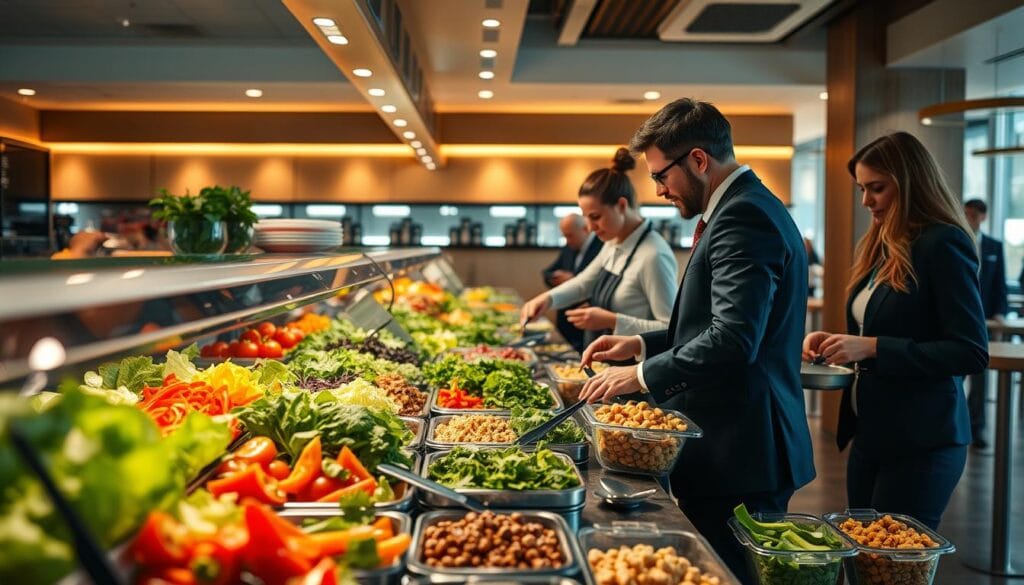
Here’s a sample comparison table to help you analyze your pricing strategy:
| Menu Item | Your Price | Competitor 1 | Competitor 2 |
|---|---|---|---|
| Classic Garden Salad | $8.99 | $9.50 | $8.50 |
| Grilled Chicken Salad | $11.99 | $12.99 | $11.50 |
| Caesar Salad | $10.99 | $11.50 | $10.50 |
By comparing your prices to your competitors, you can keep your salad bar competitive. This helps you maintain a good profit margin.
Monitoring Performance and Customer Feedback
To grow your business and make customers happy, it’s key to watch how you’re doing and what customers say. By tracking important numbers, you can make smart choices to better your service and customer experience.
Key Performance Indicators
Looking at things like how often customers come back, what they spend on average, and how sales are doing gives you great insights. These numbers help you see what your customers like and change your marketing to meet their needs.
Leveraging Customer Reviews
Getting customers to share their thoughts is important for building trust and bringing in new people. By quickly responding to what customers say, you show you care about making them happy. This helps you get better at serving your customers.
Keeping an eye on how you’re doing and what customers say helps you get better. This way, you can build a loyal group of customers. This is key to making your salad bar restaurant a success.