
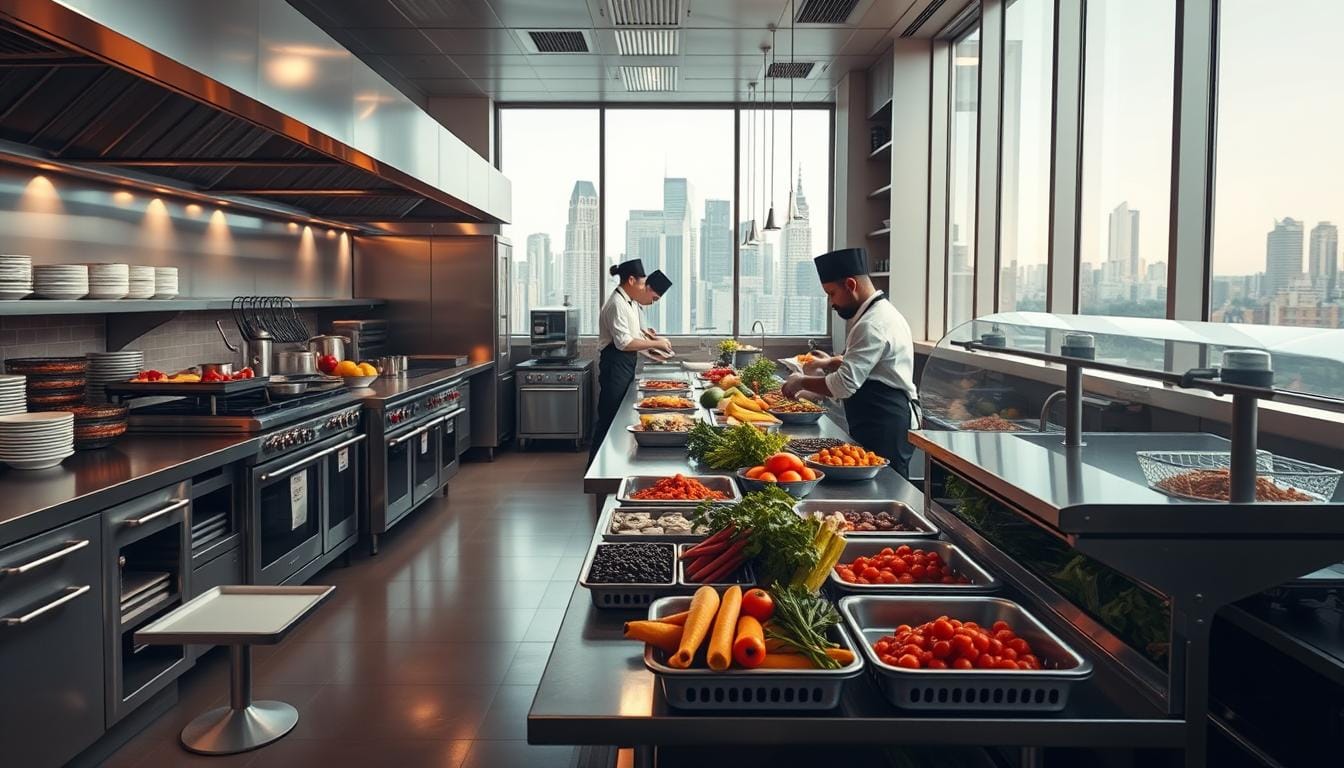
“The biggest risk is not taking any risk…” Mark Zuckerberg’s words hit home for entrepreneurs. Starting a cloud kitchen business is a bold step. But it can pay off big time.
The cloud kitchen market is on fire, worth $73.18 billion in 2024. It’s expected to grow 11.9% every year until 2030. This boom is fueled by the rise in food delivery and the perks of innovative virtual kitchen strategies. These include low costs and the ability to change menus easily.
You can tap into this trend with profitable cloud kitchen concepts that meet different tastes. With the right cloud kitchen business ideas, you can build a thriving and growing business.
Table of Contents
Introduction to Cloud Kitchens
Cloud kitchens are becoming a big deal in the food delivery world. They offer a place to cook food without needing a physical store.
Definition and Concept
Cloud kitchens, also known as ghost kitchens, are places made just for cooking and delivering food. They don’t have a dining area. Instead, they focus on filling online orders as more people want food delivered.
Current Trends in the Industry
The cloud kitchen world is growing fast. This is thanks to trends like online food delivery and ghost kitchens becoming more popular.
Some trends in the industry include:
- Multi-Brand Kitchens: Now, many cloud kitchens host different food brands under one roof.
- Shared Kitchens: Shared kitchen spaces are on the rise. They let different businesses use the same space, saving money and boosting efficiency.
| Business Model | Description | Advantages |
|---|---|---|
| Single-Brand | One brand operates from the kitchen | Focus on a specific cuisine, streamlined operations |
| Multi-Brand | Multiple brands share the kitchen space | Diversified offerings, shared resources |
| Shared Kitchen | Multiple businesses share the kitchen and resources | Reduced costs, increased efficiency |
Understanding these trends and models can help you navigate the cloud kitchen world. It can guide your decisions for your business.
Key Benefits of Starting a Cloud Kitchen
Starting a cloud kitchen can change your food business game. It lets you grab top cloud kitchen startup opportunities and lead in the food industry.
Cloud kitchens bring cutting-edge digital restaurant solutions. You can run a restaurant without a physical space. This cuts down on operational headaches.
Low Overhead Costs
Cloud kitchens cut down on startup costs. You save on rent, utilities, and decor. This means more money for kitchen gear and marketing.
With less overhead, you can try out different foods and menus. This is key in today’s fast-changing food world.
Flexibility in Menu Offerings
Cloud kitchens let you change your menu fast. You can keep up with what customers want and new food trends. This way, you’re not stuck with one menu forever.
This flexibility also lets you test new food ideas. You might find new ways to make money. Using cutting-edge digital restaurant solutions, you can manage many virtual restaurants from one kitchen.
By going for a cloud kitchen, you get a smoother operation, lower costs, and more flexibility. This is great for a market that’s always changing.
Essential Steps to Launch a Cloud Kitchen
Starting a cloud kitchen business requires market research, strategic planning, and setting up operations. It’s key to follow a series of steps to ensure success.
Conducting Market Research
Market research is the base of a successful cloud kitchen. You must know your target audience, their likes, and the competition.
Key aspects to research include:
- Consumer demographics and preferences
- Competitor analysis
- Market trends and forecasts
With this info, you can craft a strategy that meets your market’s needs. This will set your cloud kitchen apart from others.
Selecting a Suitable Location
Finding the right spot for your cloud kitchen is vital. It should be easy for delivery drivers to get to, have enough space for your kitchen, and follow local laws.
Consider these factors when picking a location:
- Accessibility and proximity to major roads
- Space and layout for efficient kitchen operations
- Compliance with local regulations and zoning laws
Also, think about the cost of rent or buying, utilities, and other expenses when looking at locations.
Popular Cuisine Options for Cloud Kitchens
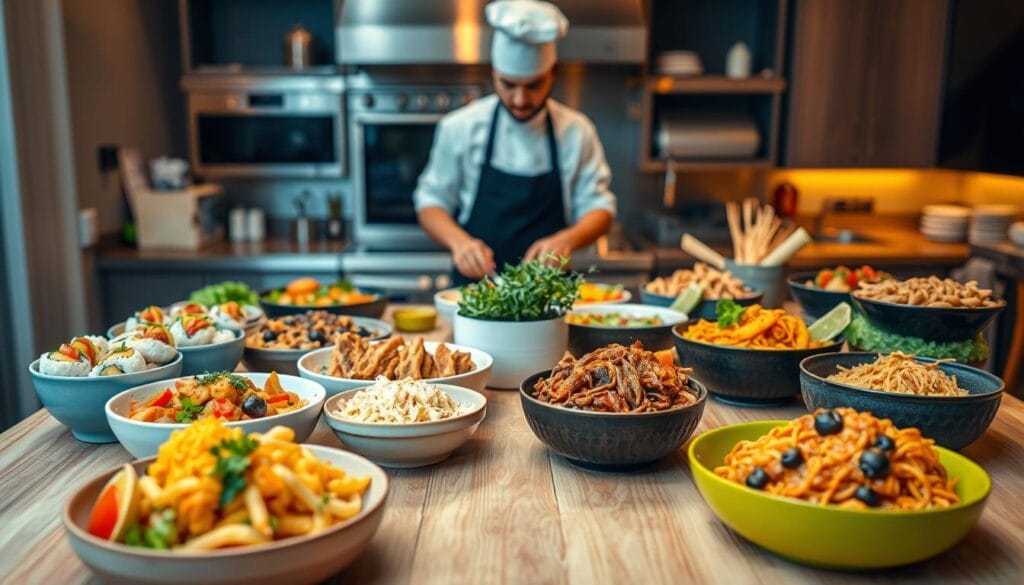
Cloud kitchens offer a wide range of cuisines, from global flavors to health-conscious options. This variety is a big plus, letting you meet different customer tastes and stay on top of food trends.
Global Flavors
Global flavors are a hit in cloud kitchens, tapping into the demand for international dishes. You can try out:
- Indian curries
- Italian pasta dishes
- Chinese stir-fries
- Mexican tacos
Adding these global flavors to your menu can draw a wide range of customers. It keeps your offerings fresh and exciting. This move aligns with emerging ghost kitchen trends, focusing on diversity and innovation.
Health-Conscious Choices
Health and wellness are big now, making health-conscious options a smart choice for your menu. Think about adding:
- Salads with lean proteins
- Vegetable-based bowls
- Lean protein wraps
- Low-carb options
These choices meet the needs of customers seeking nutritious meals that still taste great. Highlighting health-conscious options can set your cloud kitchen apart and attract health-focused customers.
Plant-Based Menu Ideas
Plant-based cuisine is a rising trend in cloud kitchens. You can come up with creative, tasty, and eco-friendly plant-based dishes. Some ideas include:
| Cuisine | Dish | Description |
|---|---|---|
| Vegan | Lentil Curry | A flavorful curry made with red lentils and a blend of spices |
| Vegetarian | Roasted Vegetable Bowl | A hearty bowl filled with roasted vegetables and quinoa |
| Plant-Based | Jackfruit Tacos | Tacos filled with tender jackfruit, salsa, and avocado |
Adding plant-based options to your menu can attract customers who care about sustainability and dietary choices. This move boosts your menu variety and meets the changing tastes of consumers.
Technology in Cloud Kitchen Operations
Cloud kitchens are becoming more popular, and using cutting-edge digital restaurant solutions is key. Technology helps make cloud kitchens run smoothly, from taking orders online to managing the kitchen.
The heart of a cloud kitchen is how it handles orders and operations. Online ordering systems are essential here. They let customers order easily, either online or through an app. These systems work with the kitchen’s workflow to cut down on mistakes and delays.
Online Ordering Systems
Online ordering systems make it easy for customers to order. They offer features like:
- Menu customization
- Real-time order tracking
- Secure payment processing
These systems help cloud kitchens please customers and avoid order errors.
Kitchen Management Software
Kitchen management software is vital for cloud kitchens. It helps manage orders, inventory, and staff better. It includes features like:
- Order management and prioritization
- Inventory tracking and alerts for low stock
- Staff scheduling and performance monitoring
With this software, cloud kitchens can work better, cut waste, and boost efficiency.
Technology in cloud kitchens boosts efficiency and helps with a successful online food delivery model. The right tech lets cloud kitchens stay competitive and succeed in the long run.
Marketing Strategies for Cloud Kitchens
Your cloud kitchen’s success depends on effective marketing to your target audience. With the cloud kitchen industry growing, innovative virtual kitchen strategies are key to standing out.
Marketing for cloud kitchens needs a multi-faceted approach. One important strategy is using social media advertising to find new customers. Sites like Facebook and Instagram help you target specific groups, making it easier to attract new customers.
Social Media Advertising
Social media ads are a strong tool for cloud kitchens. By making engaging content and ads, you can bring more people to your online ordering. For example, using tips for marketing your dark kitchen can boost your social media game.
Here are some tips for better social media ads:
- Target ads to match user interests and demographics
- Post content that highlights your menu
- Work with influencers to grow your audience
Collaborating with Food Delivery Services
Another smart move is teaming up with food delivery services. This partnership can make your kitchen more visible and reach more people. It also gives you insights into what customers like.
To make the most of these partnerships, focus on:
- Make your menu perfect for delivery
- Ensure fast and quality service
- Use customer data to shape your marketing
By using these tactics, you can boost your cloud kitchen’s online image and draw in more customers. The secret to great marketing is knowing your audience and adjusting your plans to fit their needs.
Financial Considerations for Cloud Kitchens
Financial planning is key to a cloud kitchen’s success. It helps you make smart choices and grow your business. Knowing the financial details is essential in the competitive food delivery market.
Budgeting Your Start-Up Costs
Budgeting is vital for starting a cloud kitchen. You must plan for costs like kitchen rental, equipment, staff, and marketing. A good budget ensures your kitchen is profitable from the start.
When budgeting, consider these key areas:
- Kitchen Setup: Initial costs for equipment, utensils, and furniture.
- Technology and Software: Expenses for online ordering systems and kitchen management software.
- Marketing and Advertising: Costs for promoting your kitchen on social media and food delivery platforms.
- Staffing and Training: Costs for hiring and training staff, including chefs and delivery personnel.
Knowing these costs helps you create a detailed budget. This supports your business goals and builds a strong financial base.
Understanding Profit Margins
Profit margins are crucial for your cloud kitchen’s success. They show how profitable your menu items and business operations are. To keep margins healthy, balance your prices with ingredient, labor, and other costs.
Here are ways to boost your profit margins:
- Menu Engineering: Review and adjust your menu to highlight profitable items.
- Supply Chain Optimization: Find affordable ingredients and supplies without sacrificing quality.
- Operational Efficiency: Improve kitchen operations to reduce waste and boost productivity.
By focusing on these areas, you can increase your profit margins. This ensures your cloud kitchen’s financial health.
As the cloud kitchen industry grows, it’s important to keep up with profitable cloud kitchen concepts and emerging ghost kitchen trends. This knowledge helps you adapt your business and financial strategies. It keeps you competitive and ensures long-term success.
Legal Considerations in Operating a Cloud Kitchen
Starting a cloud kitchen is more than just a tasty menu. You need to follow many legal rules. Knowing these rules is key to your success.
Licenses and Permits
You must get the right licenses and permits to start. This includes a business license and a food service permit. The exact ones you need depend on where you are. Check with your local government for details. For more info, visit Oracle’s Cloud Kitchens page.
Having all the right licenses shows you’re serious and trustworthy. It’s a big step in making your cloud kitchen respected and legal.
Food Safety Regulations
Following food safety regulations is very important. This means keeping your kitchen clean, handling food right, and passing health checks. Following these rules keeps your customers safe and happy.
Learn about local health laws and codes. You might also want a strong food safety plan. For help with legal terms, look at Quick Eats Hub’s Terms of Service.

By knowing and following the law, you can focus on offering cutting-edge digital restaurant solutions and new cloud kitchen business ideas. Being up-to-date and proactive with legal matters is crucial for your cloud kitchen’s success.
Future Trends in the Cloud Kitchen Industry
The cloud kitchen industry is growing fast. This is thanks to changing what people want and the push for being green. To keep up, you need to try new things in your virtual kitchen.
Embracing Eco-Friendly Practices
People care more about the planet now. You can help by cutting down on waste, using green packaging, and buying local ingredients.
Adapting to Changing Consumer Demands
What people like to eat is always changing. To stay ahead, you should update your menu and how you deliver food online. Adding healthy or plant-based dishes is a good idea.
By keeping up with these trends and using smart food delivery methods, your cloud kitchen can thrive for years to come.